America isn’t what it used to be. I knew that the way everybody kind of knows it, in a vague, grumbly sort of way. But I didn’t really SEE it until we sailed out here, where people still leave the keys in the car. Let me show you what I mean.
Key’s in it
In Aitutaki we needed a car for the day, so I rode a Segway scooter over to the rental guy’s place. I was expecting an office. What I found was a private home with chickens and dogs running around the yard, and I honestly wasn’t sure I was in the right place.
Soon enough, a stocky barefoot fellow came out and greeted me with a smile. I told him the tourist office had made a reservation for me. “Oh sure,” he said. He pointed at two cars parked on a grassy berm across the street. “Take either one of those. Key’s in it....”
I looked at him quizzically. Didn’t he want my license? A credit card? Something??
“We don’t need paperwork,” he said with a shrug, as if it was perfectly obvious.
At the end of the day I brought the car back and he was nowhere to be found. His wife was asleep on the sofa. So I parked it by the road and left the cash in the glove box. Obviously that was fine, because I never heard anything about it again!
I laughed about it all the way back to the boat. But somewhere under the laugh there was a little jolt, and the first flicker of something sadder. In LA, renting that same car takes two forms of ID, a hold on your credit card and maybe a cranky counter clerk. Nobody hands you a key on the strength of a smile. I didn’t know what we’d been missing until a guy with chickens in his yard showed me. And the more I thought about it, the more it felt like something we used to have back home, and somehow let slip away.
The red Altima, west of the pool
Months earlier, in El Salvador, we’d been at Bahía del Sol, where Bill - of Bill & Jean, the Bahía del Sol rally hosts - put us in touch with Hans, the local car rental dude. I got his WhatsApp and messaged him that I needed a car on Thursday.
“No problem. I’ll bring it to the hotel and text you where to find it. Keys will be in the glove box.”
Thursday morning, the text came: “red Altima, parking lot west side of the pool, keys in the glove box. Please bring it back with fuel at same level. Gracias.”
He only knew my first name and my WhatsApp number. That’s it.
At the end of the day I parked it - this time east of the pool - messaged him where it was, and left the cash in the glove box with the key. Easy peasy. I rented from him four times, and it was the same drill every time.
Never laid eyes on him.
$700 on a handshake
Later, in Vava’u, Tonga, I hired Greg of Tropicana Cafe to drive me to the fuel station. We needed 400 liters of diesel. Greg is one of those old hands who knows everybody in town and is a trove of advice and knowledge.
At checkout Greg asked how much cash I had. Cash? No cards?? A fuel station that doesn’t take cards?? The bill was over 1,500 TOP - nearly $700 USD - and I didn’t have nearly that on me.
Greg shrugged. “I’ve got it.” He paid the whole bill, and asked me to bring the cash tomorrow along with the jerry cans he’d loaned me.
$700 cash, on loan for a day, to a guy he didn’t know. He knew my first name and the name of my boat. That’s it. (Sound familiar?)
Now, (almost) no cruiser would DREAM of stiffing him!! And he knows that. And that’s just how it works. The trust is just.... there.
Because it deserves to be.
Now try picturing that back home. Hahaha! Yeah, me neither.
Pirate hats and a presidential repost
Back to El Salvador for a minute. (Fun fact: the country is literally named after Jesus - El Salvador means “The Savior.”)
Through a serendipitous “Bienvenidos!” and DM exchange on TikTok, a rapport was struck with a gem of a person I’d never met. Herbert Esmahan, a well-known Salvadoran TV political commentator, dropped me a note welcoming us to his beautiful country. A few more clicks of the send button, and it turned into an invitation. We didn’t know him from Adam, and now we’re lifelong friends. His family, including his mom Jackie, welcomed Meghan and me into their lives and drove us all around San Salvador, the El Boquerón volcano and various fantastic pupuserías. (The pupusa is the taco of El Salvador.)
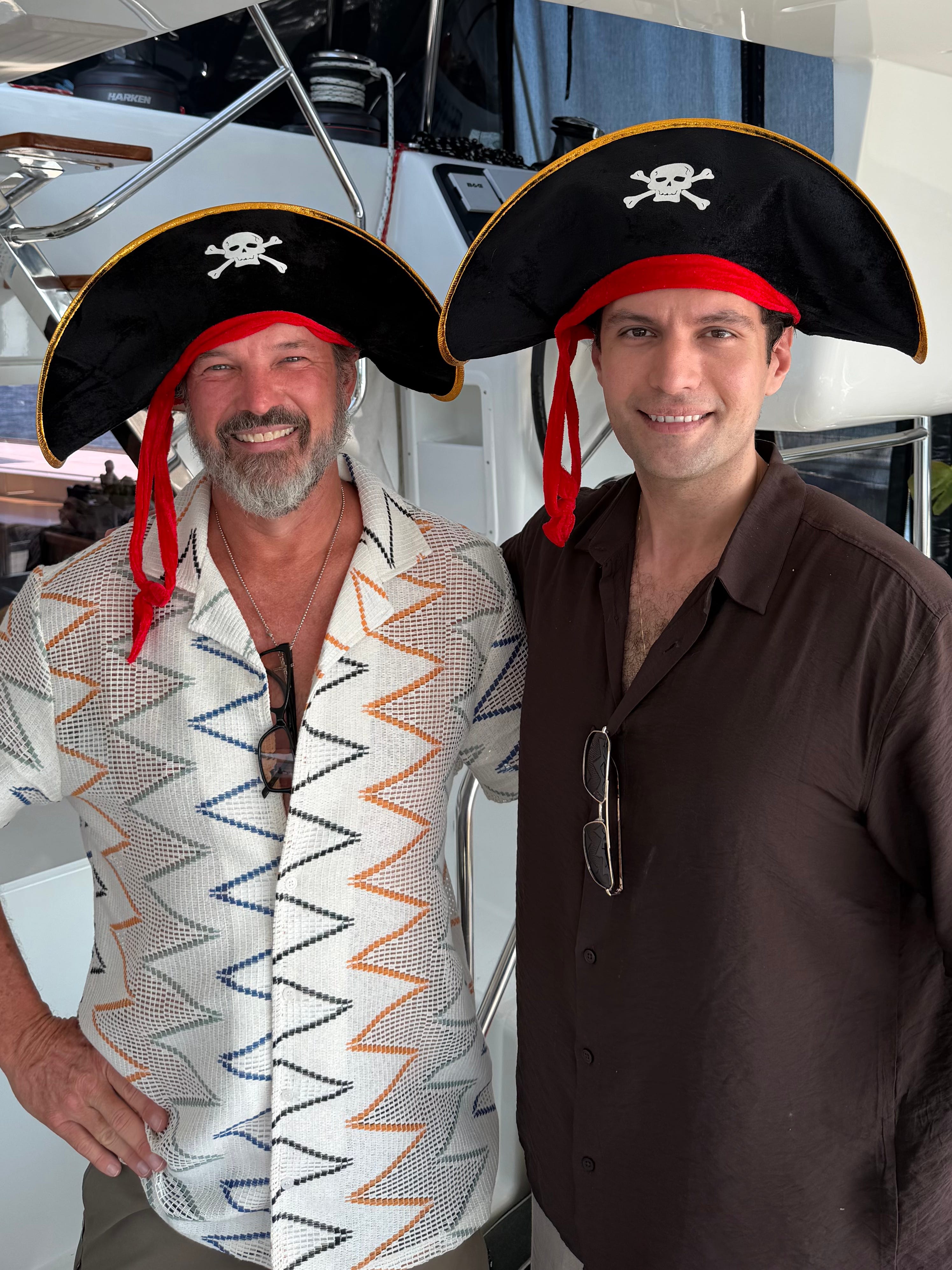
Herbert and his cousin Gabe also spent a day on the boat with us, and they showed up with pirate hats!! This too was emblematic of trust. My first reaction when Herbert messaged me is that, “this must be a scam.” Nope! He was a genuine guy, welcoming us to his country and extending trust to a total stranger. Sensing a theme yet?
Then there was my silly video of Some Tuesday being rocked by the wakes of passing boats (no-wake zones aren’t a thing there). In March 2026, President Bukele reposted it on his TikTok page!!! (Here’s the original on TikTok.) I didn’t even know!! The comments blew up, almost entirely in Spanish, so I couldn’t always track what was going on. Someone mentioned President Bukele reposting my video, so I replied, “Wow, that would be so cool. I would love that!!”
They laughed at me: “Púchica, bayunco, check his page!!”
It was hilarious. And also felt like trust. I wasn’t vetted. This wasn’t a photo op. I was just a guy who made a video that the president of the country thought was funny. President Bukele is also well-known to run his own social media accounts.
Everybody waves (well, almost everybody)
Mexico was warm. So warm that I got a little carried away. In Mazunte, a Western hippy village on the Pacific coast, I was walking down the sidewalk past three young men - probably European - with man buns and tattoos, sitting at a table outside a kombucha shop (because, of course). By then I was so used to saying hello and smiling at everyone in Mexico that I did it to them too.
Blank stare. Like they were wondering what my angle was. Hahaha! Fair enough, I suppose.
In the Cook Islands and Niue, people wave at every car. Every one!
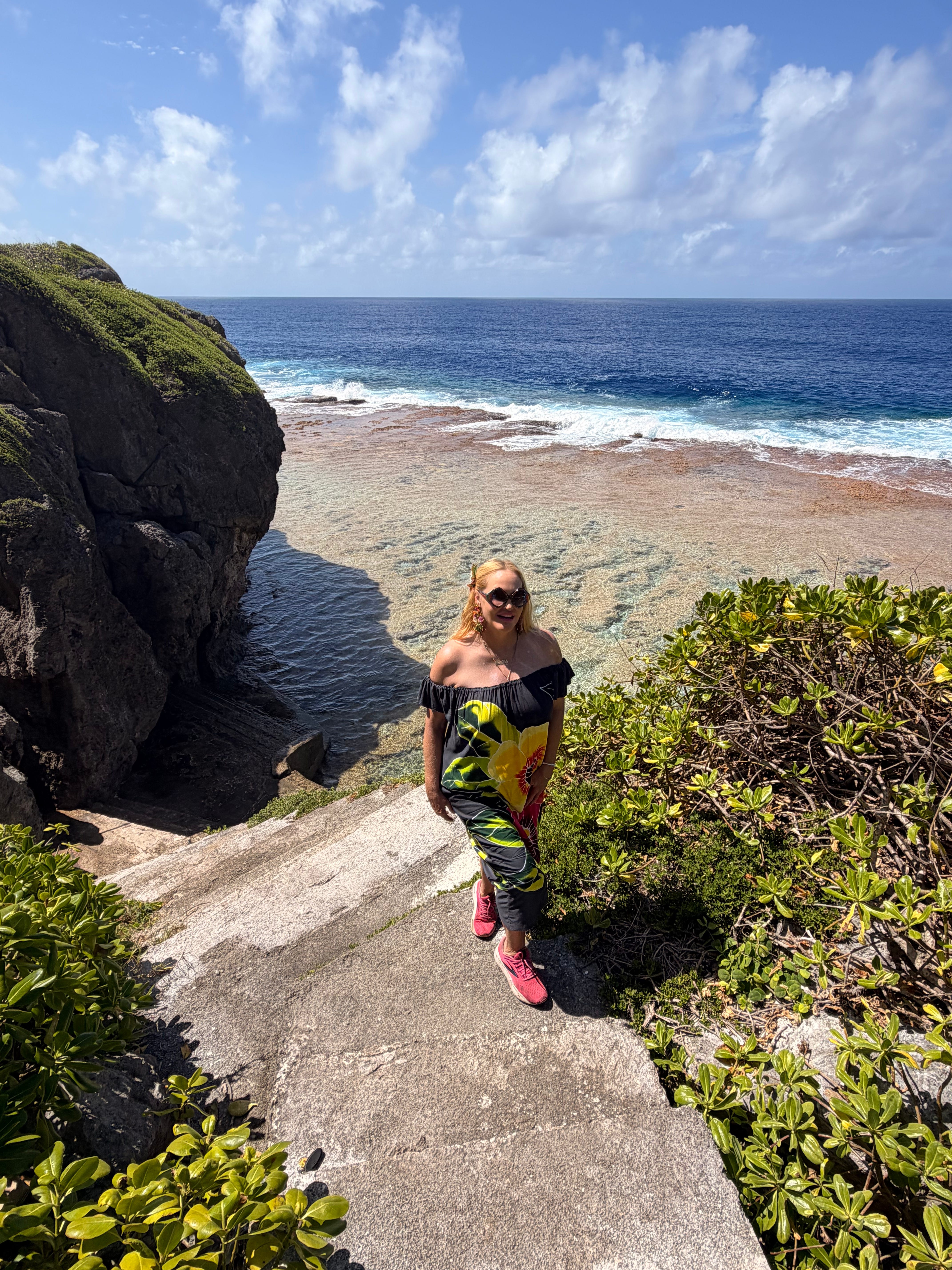
In Niue we visited every single sea track - the little roads and paths that lead down to the water - and every time we pulled to the side of the road to look at a map, a friendly local pulled over to check on us and offer help and advice. They seemed genuinely happy we were there. When’s the last time a stranger pulled over back home just to ask if you were OK?
I think that’s part of why cruisers share a real value of being respectful and courteous to the local communities. The trust goes both ways. It’s the Greg-and-the-cash thing again - because it’s deserved.
French Polynesia was different again. The Western “invisible suit” was a lot more common there. People weren’t disagreeable, just less outgoing. It was also the ONLY place someone acted annoyed with us for just existing - a weird air of boredom leavened with annoyance. And of course, that’s the French! Everybody knows the French are like this - especially the French - and I’ve had many a beer with French guys who jokingly acknowledge it. (The same way I make fun of myself for being a loud, boisterous American! If you can’t laugh at yourself, you’ve got nothing.)
Nobody’s telling you no
Every time we go ashore, our dinghy and outboard sit right there at a dinghy dock. That’s expensive gear. Sometimes we chain it up, but more often we don’t. We’ve never had a problem - and this is in a world where a working boat is how a lot of people earn a living.
On walks in several places we’ve worried about the feral dogs, which are common and could actually be dangerous. But the people? Not so far!
I want to be honest here, because it’s not paradise. There’s the odd petty theft. An outboard gets stolen now and then, although that’s more common in Central America and Mexico than in the South Pacific. A few months back in Raiatea, some young people got in trouble for boarding someone’s boat and vandalizing it while the owners were away. So it’s not perfect - but my point stands.
The difference is that in places like LA, that kind of bullsh!t is accepted as routine daily life. Here it’s unusual.
Something else crept up on me in Niue. There are very few police, very few signs and very few rules. A lot of people don’t bother to lock their doors.
And then there are the sea tracks themselves. Some of them are steep, hazardous paths with tall ladders - the kind of thing that would never exist in the United States. At least not anymore.
Togo Chasm, on the east coast, is the best example. It’s a long walk through the forest and across jagged coral pinnacles, and then a tall wooden ladder down into the chasm. It was so high that I worried about the artificial disks in Meghan’s spine. She took it slow and was just fine. Attagirl!! But a fall would have meant serious injury or death, and there was no phone, no cell signal and no way back up except the same ladder.
Nobody’s protecting you from yourself there. The message is basically: we’re counting on you to not be a jackass and not hurt yourself. Back home, that ladder would be gone, and there’d be a sign and a fence - and a tollbooth. It would be safer, I suppose. But it would also take something away from everybody to protect the few from themselves, and I’d never really noticed how often we surrender a little freedom in reaction to the idiots among us.
Caretakers, not mere owners
Land works very differently in Niue. Somewhere around 95-98% of it is family land, held under Niuean custom by the extended family, the magafaoa. You can’t sell it. The only option is a lease, so there are no US-style parcels with a For Sale sign out front.
What you DO see everywhere are family graves on family land. Marble, fresh flowers, the ground around them raked clean.
At Hio Cafe in Tuapa, we chatted with the owner, Victoria, for quite a while one night. Hio sits on her family’s land - it came to her from her father, and she walked us through the family history back to his father. She explained that the graves are how a family marks its land. If someone accidentally stumbled onto another family’s land and came across their graves, they’d know right away they didn’t belong there, and step back. Nobody would imagine spending time on land where they didn’t belong. And there’s a strong sense of what we’d call karma: do wrong on someone else’s land, or around their graves, and something bad will happen to you. It wasn’t about fences. It was about respect, for each other and for the land itself.
The more she talked, the clearer it was that she didn’t think of herself as the “owner” of a property with an ROI, so much as the caretaker of something bigger than she. She said her kids would live on and work the land someday, and if they chose not to, well, someone would come along who wanted to work it and care for it.
When I told her what wonderful people Niueans are, she laughed and said they weren’t perfect. They drive like a bat out of hell, she said, and if I ever saw a dead chicken in the road, it was certainly run over by a Niuean!
(Her husband Tony is also the guy who went and got us another coconut crab when ours escaped into the woods on Uga Night. Long story!)
Victoria and Tony had lived in Australia and in Abu Dhabi, and they always planned to come home. Their cafe is built from the shipping container that brought their things back to Niue. Other Niueans are coming home too.
At one point Victoria told us she’s “rich.” Not financially, obviously. But she meant it from the depths of her soul, and I believe her. She’s one of the richest people I’ve ever met.
The flip side is that it’s common for Niueans to move to New Zealand for work. Some of them may not realize how good they’ve got it, and they leave to chase financial goals they may regret later. I get it, though. Everybody wants what they don’t have, eh? I have curly hair. As a young man, I always wished I had straight hair. Now, I just wish I had hair!!
And I’m not judging anyone for leaving. We left home too. The difference is that they left and came back, and we left and are only now seeing what we left behind, and what home used to be.
The church in the middle
It all comes down to individuals. Two rental guys chose to hand a stranger the keys. Greg chose to pay my fuel bill. The locals who pulled over to check on us in Niue chose to stop. No one made them. Each of them decided to trust somebody and look out for somebody, and then the next person did the same, and you end up with a whole island or country where it’s just… normal. That’s how it used to work back home, too. One person at a time.
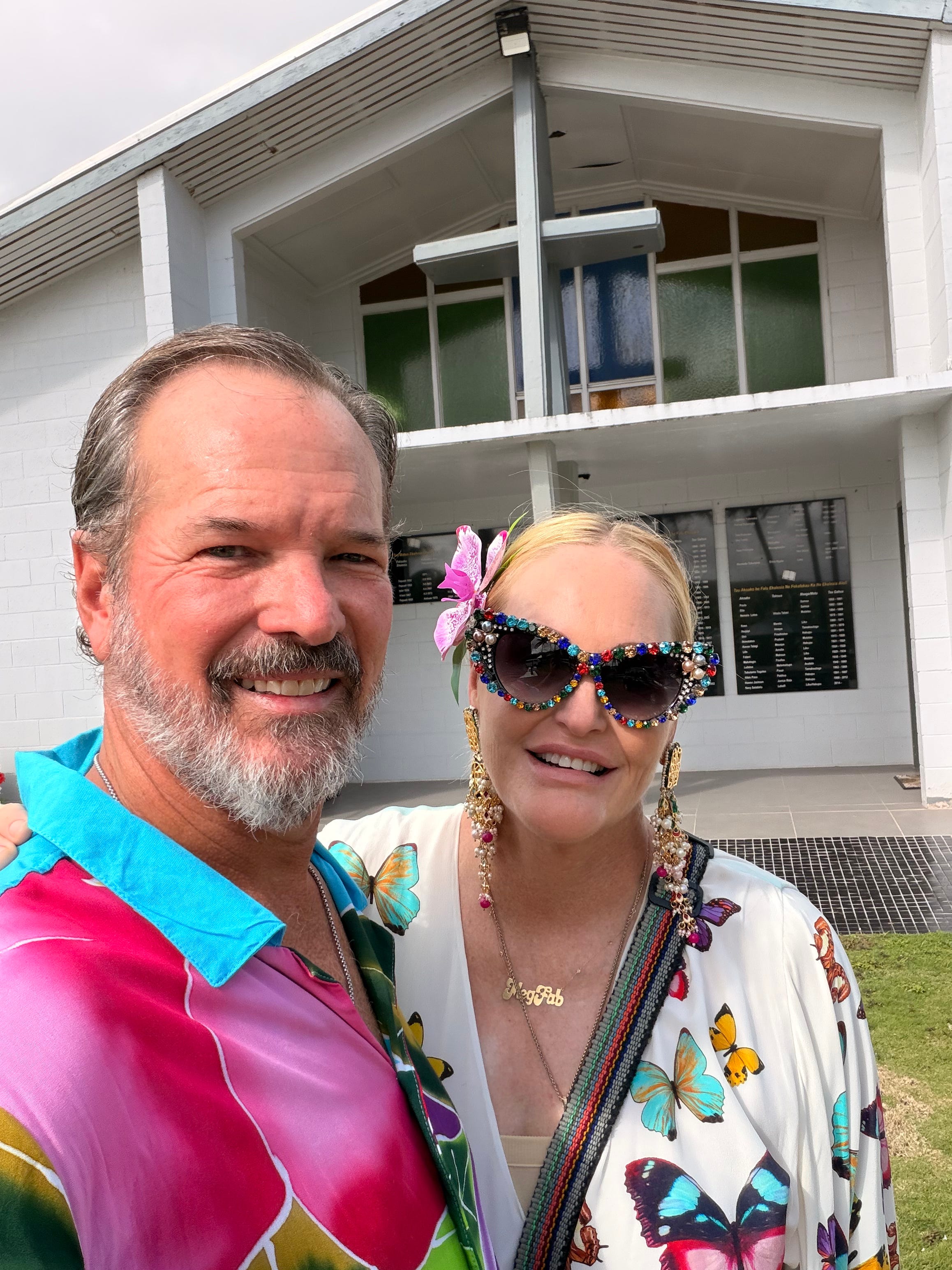
In Aitutaki we went to the Apostolic church, and it was pretty obvious we were outsiders, and they were generous anyway. In Niue we went to the Ekalesia (Ekalesia Kerisiano Niue), and about 85% of the service was in Niuean. Like the church in Aitutaki, it was joyful, ebullient and electric - true joy in the air. Even though it was in a language we didn’t speak, we understood.
Tonga is conspicuously Christian - there’s a cross right on the flag. French Polynesia is more quietly so.
And in Tonga I have to confess something. One Sunday we slept in and failed to get out of bed for church. Ugh. But we got a “virtual service” anyway, because the music and singing carried right across the bay to our boat.
Faith is prominent and central in these societies. Trust is more common and more easily given. Coincidence?
Looking home
This is the part that hurts.
When I look back home, I see red vs. blue, and people angry about the political-thing-of-the-day. There’s an overall exhaustion with the politics and the theater of it all. Rage bait. Topics you can’t bring up at dinner. Rules handed down from the top for everything. Young people who don’t even date anymore. And people getting away with things, from the highest offices right down to the street corner, and nobody seems surprised.
People should understand how golden it is to live in a world like this - and that’s why I’m sad. Not because these islands are perfect, because they aren’t. But I’m learning what we’ve lost, or had taken from us, by seeing how golden it is here.
Wave first
I’m not giving up hope. Rome wasn’t built in a day, and it won’t be rebuilt in a day either. It’s a journey of a thousand steps, and the steps are small. Wave first. Trust a little sooner. Be worthy of trust when someone gives it to you. Make a difference. Lead when you can. Tend what you’ve been given, the way those families tend those graves. Pay Greg back the next morning, jerry cans and all.
I’m hopeful about young people, too. A lot of them are paying attention - involved, concerned, and some of them are even angry. More and more of them are showing up in church on Sunday, looking for… something… truth? community? I’m also frustrated on behalf of my 20-something sons, because the world seems broken. We all need to take part in fixing it.
I came out here with my LA guard up, and I’ll admit it took a while to come down. Somewhere between a red Altima in El Salvador, a glove box in Aitutaki and a fuel station in Vava’u, I started waving back - and then waving first. It took sailing across the Pacific to show me what we’ve lost back home. Getting it back starts right in our own neighborhoods. Join me.
“Love your neighbor as yourself.” (Mark 12:31)
If you ever rent a car in Bahía del Sol or Aitutaki, leave the cash in the glove box. I bet you’ll never hear anything about it again!
The journey continues....
For the long version of all these places, check out our Cruising Guide, and follow along on YouTube and Instagram.