Days 253 - 261 of our planned five year circumnavigation (August 12 - 20, 2026)
361 nautical miles sailed from Maupiha’a, French Polynesia to Aitutaki, Cook Islands
8,987 nautical miles sailed since leaving California December 3, 2025
On August 12, the rough weather in Maupiha’a cleared and we motored through the pass just before 8am. The pass going in and out of Maupiha’a is treacherous, especially after we’ve had weather because the lagoon is overfilled by the sea crashing over the reef and it drains back out as an ebb tide that never ends. All that water has no choice but to rush through the pass like it’s draining a bathtub, creating very high current pushing the boat out. Too much current from astern can cause the boat to yaw dangerously and lose control in the worst conditions. It’s scary.
The cherry on top is the pass itself. It’s very narrow with steep walls of coral reef on both sides. It’s not well marked. The current is often ripping. There are stories of other boats hitting bommies on the way in. It’s no joke - but I’ve now done so many of these passes, I now view them with a healthy respect rather than fear.
Meghan was on the bow, spotting bommies and shallows with the headset on as I pushed the motors to cruising speed. Speed helps maintain rudder control, but it feels riskier. It’s still the better choice. As we pushed through the pass, the current was ripping at five knots and I could feel it pushing the stern. We got close to the exit, and the water became confused with high current smashing into ocean swell, causing the water to “boil.” I pushed the throttles wide open, and worked the wheel to hold course. Soon enough, we were in open ocean and breathing easy. I set the sails for a broad reach and pointed the bow west. Two-and-a-half days later, we would motor through another narrow, poorly marked pass into Aitutaki.
Aitutaki is the first stop after French Polynesia that actually feels like a reset. Not because the lagoon is prettier than what we just left — though it is unspeakably pristine — but because the whole place runs on a different kind of logic. Prices drop. People hand you car keys without looking at a license. And the only way into the marina is that long, narrow, pass that makes you hold your breath.
We came through that pass with Meghan on the bow and headsets on. It is not a pass you wing. The channel is tight, the marks are sparse, and the water does not give you a lot of room to be wrong. We made it in clean. After we were tied up, I flew the drone at low altitude the whole way back out over the channel so the next boats could see the shallows and the markers before they ever got there. That is the part of this life I like more than I expected. You arrive as a stranger. Then you leave something useful behind.
The marina itself is under construction. That is not a footnote. That is the whole experience.
Arutanga Harbour is mid-upgrade — dredging, piling, a new pier, floating docks that have not quite arrived yet. The basin is a construction site that happens to have boats in it. Everybody med-moors. Stern to the mud berm, anchor off the bow, and hope the bottom holds. There is no dockhand waiting with a smile and a cleat. There is a WhatsApp group and VHF.
When a boat comes in, the rest of us get on the radio, launch dinghies, and turn ourselves into tugboats. Somebody catches the stern lines. Somebody holds the bow off. Somebody is already standing in the mud ready to take a line. It is messy and it works. It is also the best example I have seen in the Pacific of sailors actually functioning as a community instead of just occupying the same anchorage.
One boat, Kotare, came in and we got him set — anchor down, stern lines on, everybody waving. Five minutes later he was back on the VHF. The anchor had dragged. In a med-moor, that is not an inconvenience. That is the stern and the rudders heading for land and very expensive damage. We reset him. It dragged again. We reset him a third time. Three rescues before it finally held. The seabed in that construction zone is not firm, and nobody pretends otherwise. Unsurprisingly, the skipper, Dan, is now a good friend!
The mud is the part that wore us down. To get back and forth to the boat you pull the dinghy from the boat a few meters to reach the muddy shore. The dinghy gets muddy. Then the boat gets muddy. Then you are tracking it everywhere. We did not stay as long as we might have, and that is the honest version. Aitutaki’s lagoon is one of the most beautiful places we have been. The marina is the reason we left earlier than the lagoon deserved.
You cannot take a private dinghy into that lagoon. No exceptions. So we did the thing that felt backwards for people who live on a boat: we booked a tour.
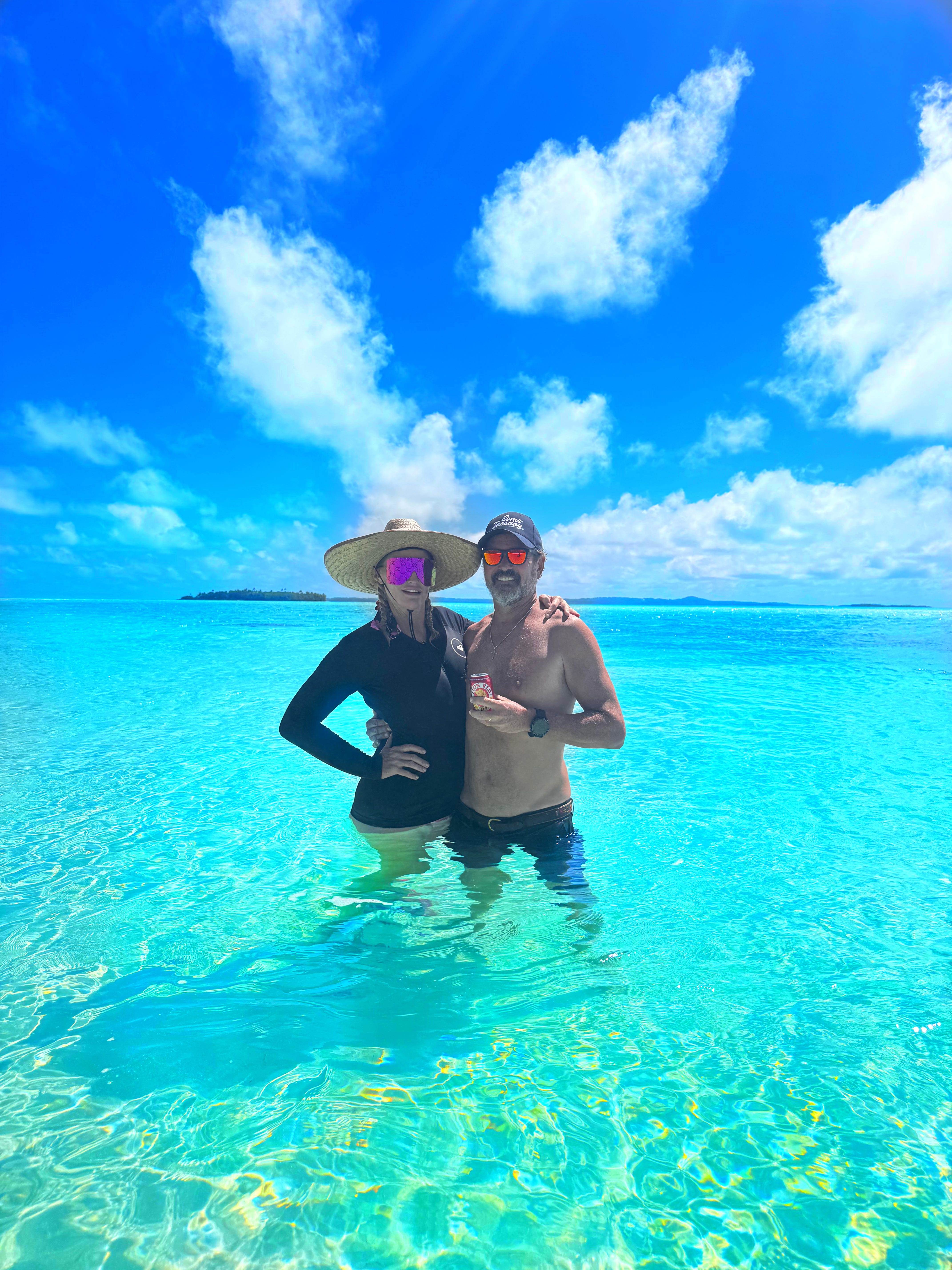
Bishop’s Cruises took us out for the day. Lunch. Snorkeling. The water is that particular Aitutaki blue that photographs never quite get right. We flew the drone and got footage I still watch. And the whole time there was this small, persistent oddness — paying to be shown a lagoon, when exploring lagoons is just what we do. In the Tuamotus we would have dropped the dinghy and gone. Here, we sat on somebody else’s boat and felt like we’d beat the system because we’d brought our own beer. One of the staff even remarked that we were genius for that move!! It was great. It was also touristy in a way our life usually is not. Both things can be true
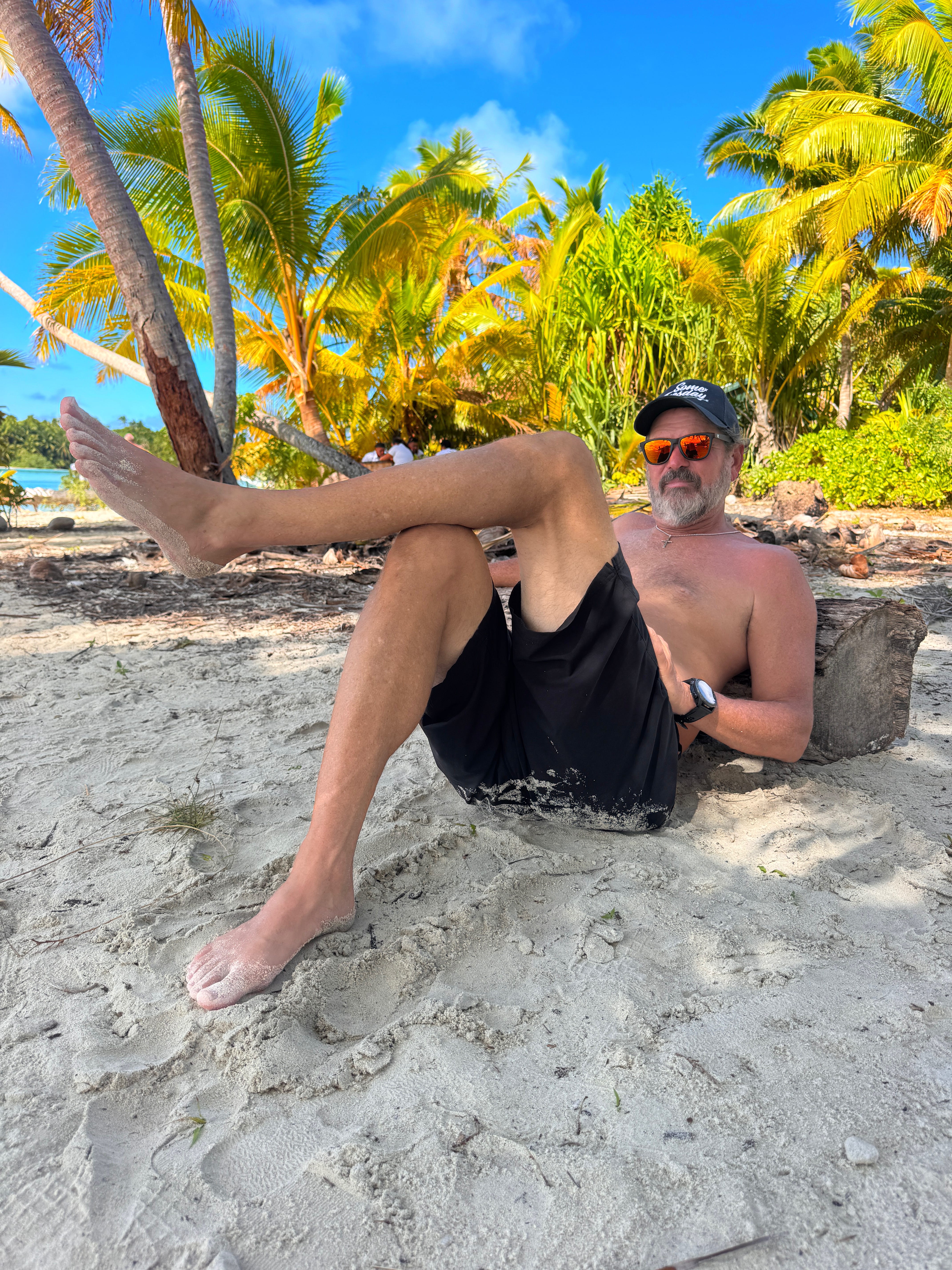
Ashore, Aitutaki is a high-trust island.
I rented a car. The lady handed me the keys and I drove off. She did not ask to see a license. That is not a cute travel anecdote. That is how the place works.
We used the rental to hunt down fresh vegetables. Meghan found two or three farms on No Foreign Land that sell mostly to restaurants and shops, but will sell to anyone who bothers to show up. We came back with lettuce, peppers, carrots — produce that had been in the ground an hour earlier — and spread it across the galley counter like it was treasure. After months of French Polynesia prices, Aitutaki restaurants felt quite reasonable. We ate well. We were glad to be out of the expensive islands.
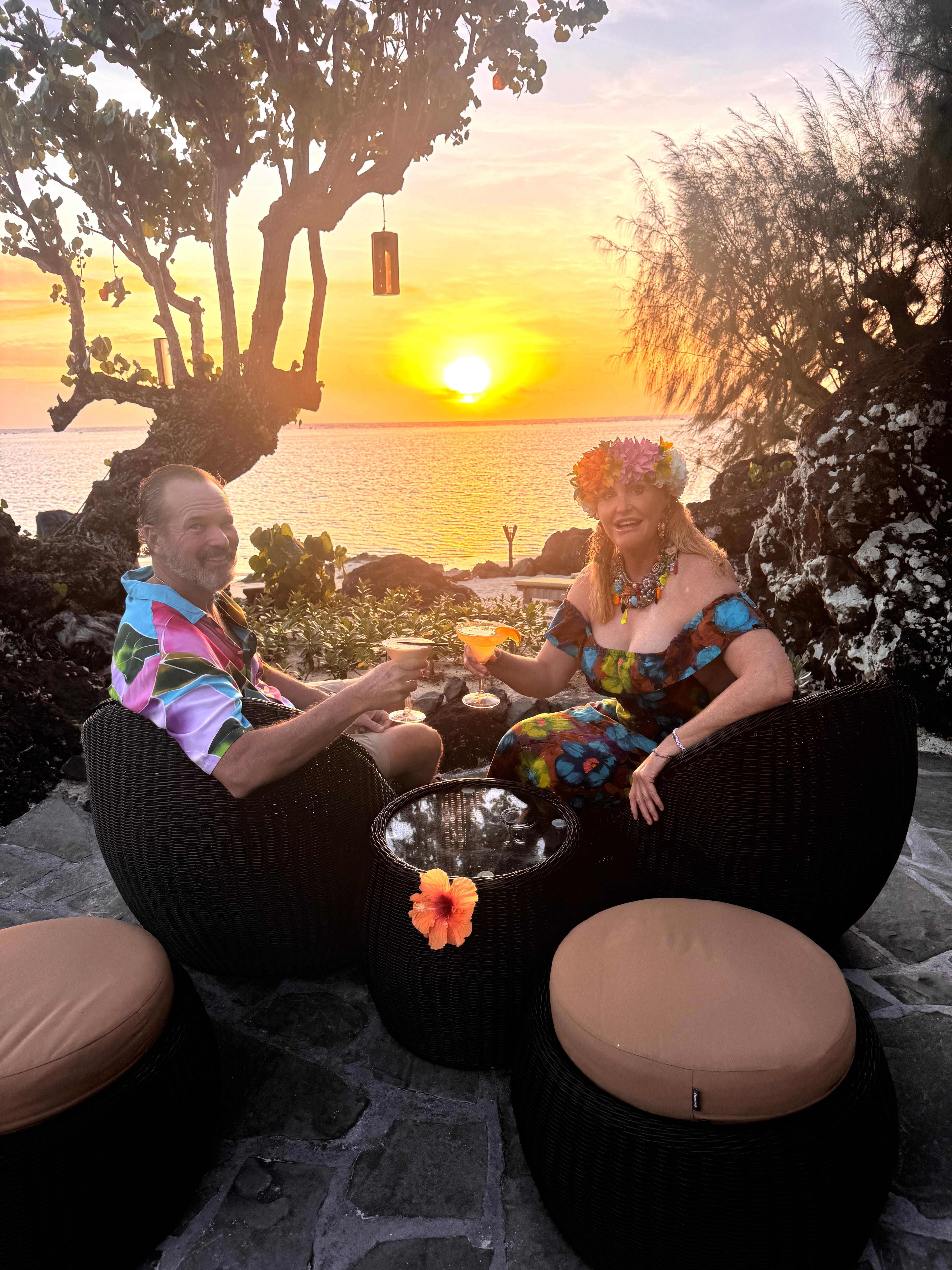
The Pacific Resort became our civilized counterweight to the muddy marina. Dinner twice. Lunch once. Drinks by the pool a couple of times. It is a beautiful property, and after a day of construction dust and dinghy sludge it felt like a different country. We got there on the electric Segway scooters we keep on the boat. Aitutaki does not see a lot of those. Locals waved, smiled, walked over, asked questions. The scooters turned every errand into a small event, which is a very good way to meet an island.
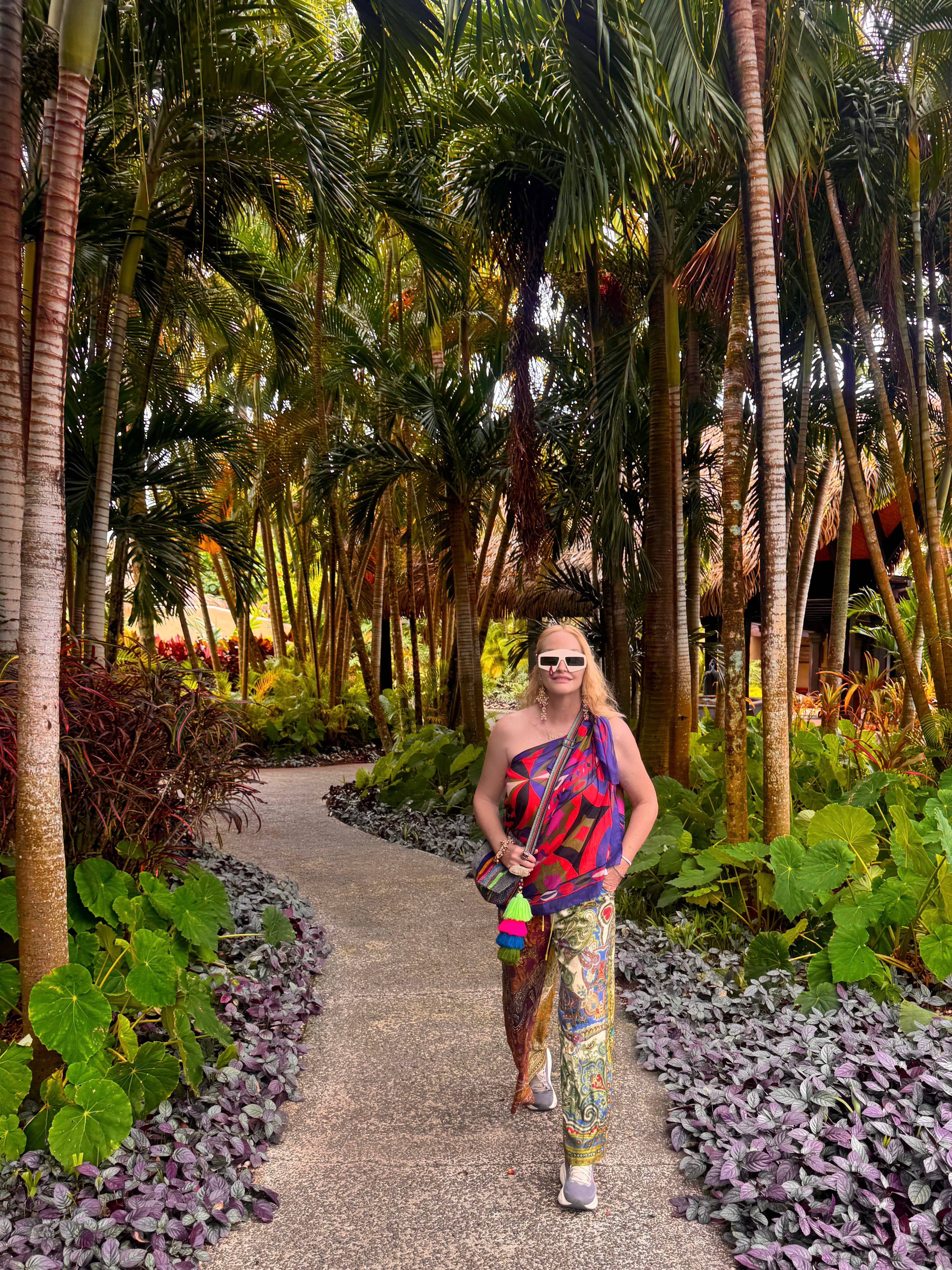
Meghan found a woman who runs a small restaurant and also sews. Meghan had a pattern, fabric, and a very specific idea of a dress she wanted made. They went through every detail. Meghan checked on it. A couple of days later she picked up the finished piece. That process — the talking, the going back, the pickup — was one of the things she enjoyed most about being there. Not the lagoon. The dress.
The crews of The Big Dog (Jason, Sarah and five kids) and Kotare (Dan and Fran) became the heart of our time there. We got fish-and-chips with them, walked sea tracks together, and would later continue the friendship in Tonga. Both crews are lovely people. What started as the usual marina small talk turned into a real friendship — the kind where you stop being boats that happen to be tied up near each other and start being people you actually miss when you leave.
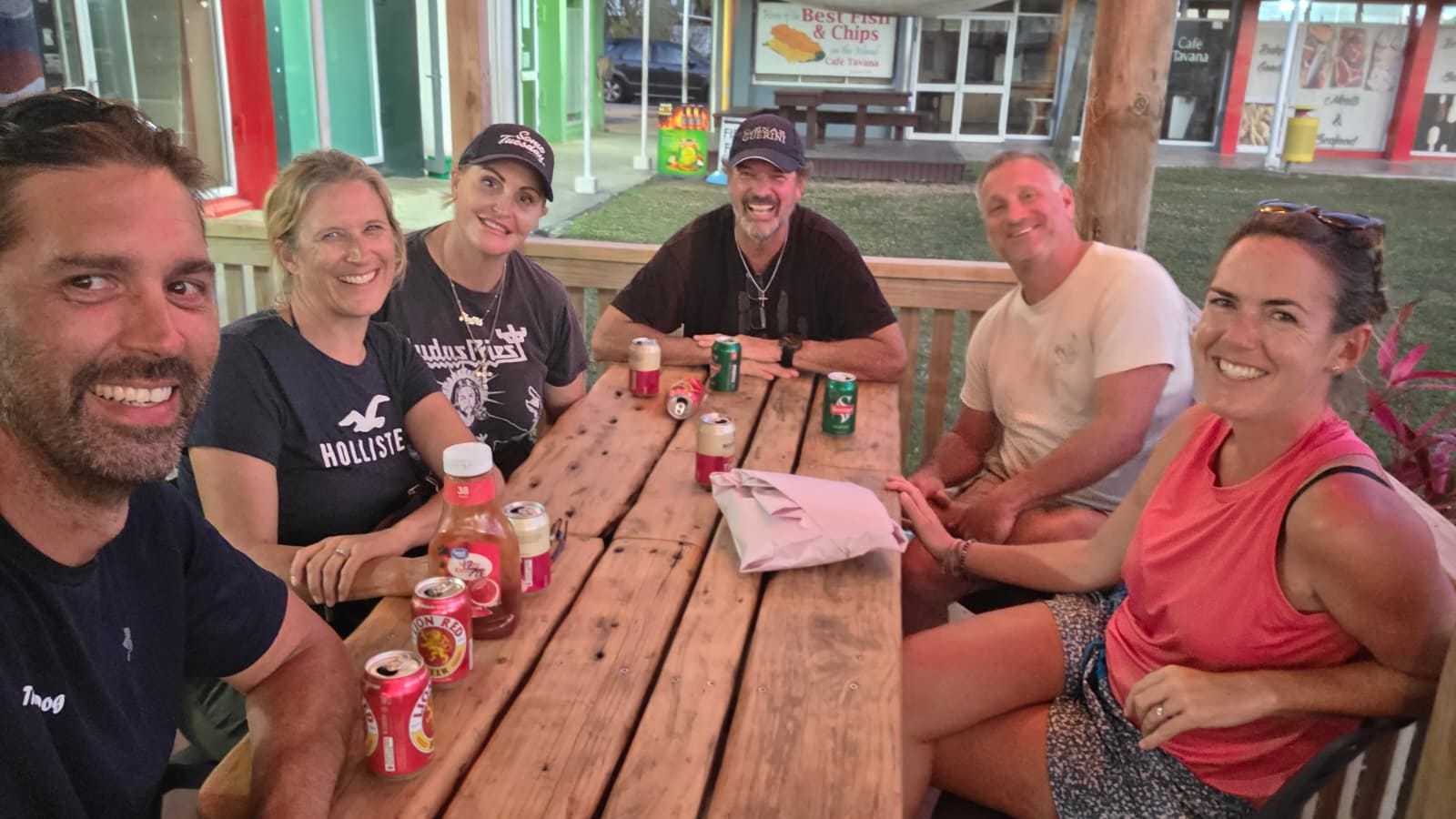
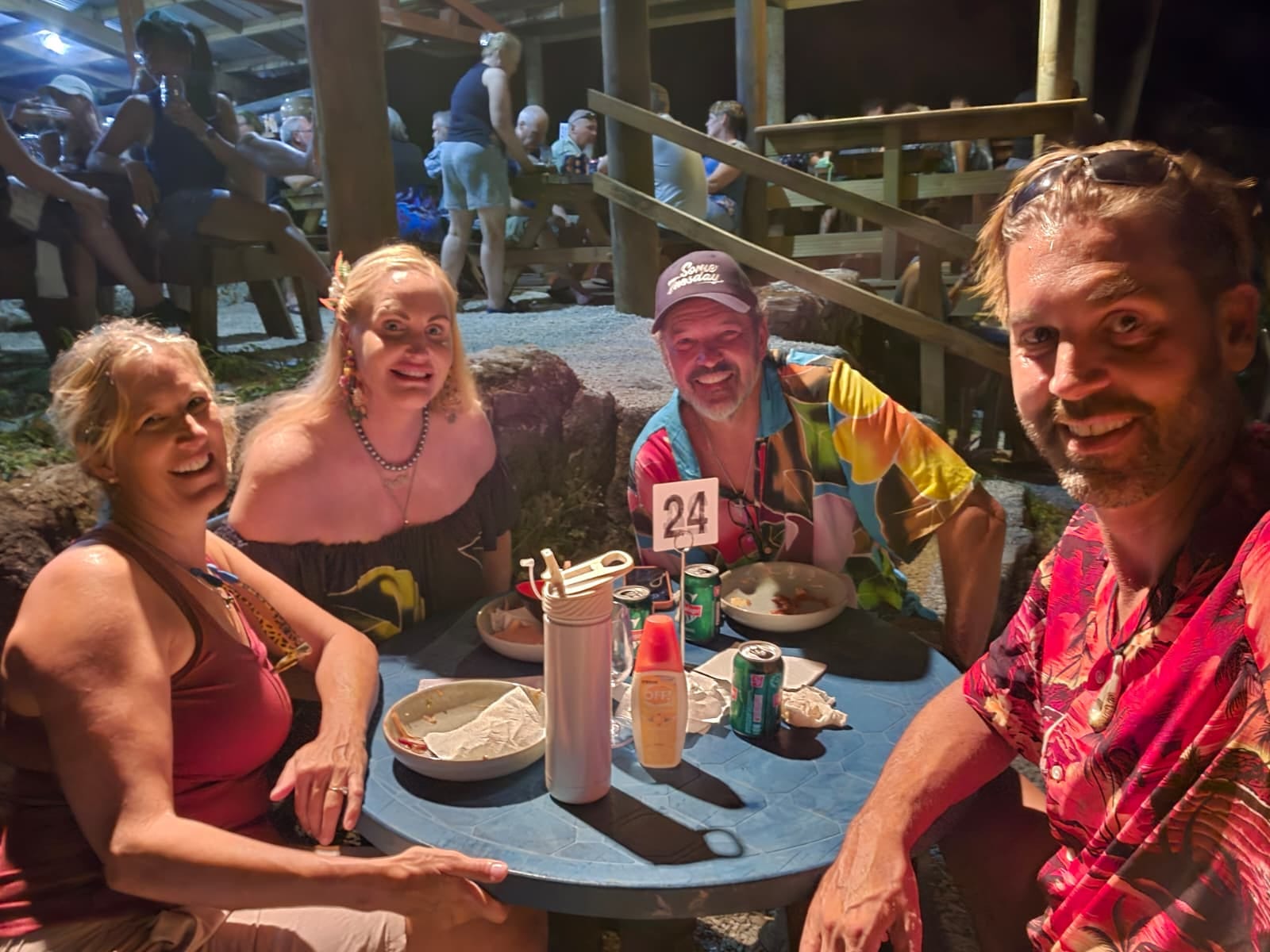
We also went to church — the local Apostolic church — riding our electric scooters there. The moment we pulled into the parking area, people came over to look at them and say hello. Numerous folks welcomed us, seemed genuinely happy we’d joined them that day, and were curious about the scooters.
The service itself was all in English, and it was ebullient. The singing was energetic, the sermon was enjoyable, and the positivity in the air was inspiring. Everybody was dressed up — the women in dresses, the men in ties. I felt a little awkward in shorts, the only man there not in a tie, but nobody seemed to mind. I’d broken the dress code, but that didn’t bother them one little tiny bit. Obviously, I was not one of them.
We also did our first whale swim. They take you out with a spotter, find the whales, and you jump in. We got in the water two or three times. There were twelve or thirteen people on the boat, and everybody splashed in at once. That is too many bodies hitting the water at the same moment. The whales left. We saw them for a few seconds as they swam away, and as they went they made this loud screech — a sound I do not have a better word for — that honestly sounded like they were mad. Meghan had been nervous before we even got in. Hannah from Kotare was on the trip too, talking about what a privilege it is to be in those waters. The privilege part is real. The crowd-management part needs work.
We sailed out of the pass on August 20 and pointed Some Tuesday at Beveridge Reef, about 356 nautical miles away. The wind came up hard. Twenty-eight knots, almost dead astern. I stripped us down until there was nothing left but the genoa, and that was 50 percent furled, and we were STILL doing six to eight knots!! That is the kind of sailing that makes you grin and also makes you check the rig. Fast. Simple. A little too much of a good thing.
Beveridge Reef is where we sat for nearly a week waiting on a mooring in Niue. That is the next story. This one ends in the trades, half a headsail, and a muddy dinghy that still needs cleaning!
The lagoon was worth it. The people were worth it. The marina was a construction zone that happens to be the only way in. If you go, bring extra dock line, get on the WhatsApp group, and assume you will spend part of your visit helping somebody else’s boat get safely moored and tied up. That is not a downside.
That is Aitutaki.