Days 261 - 269 of our planned five year circumnavigation (August 20 - 28, 2026)
586 nautical miles sailed from Aitutaki, Cook Islands (456 to Beveridge Reef, 130 from Beveridge to Niue)
9,348 nautical miles sailed since leaving California December 3, 2025
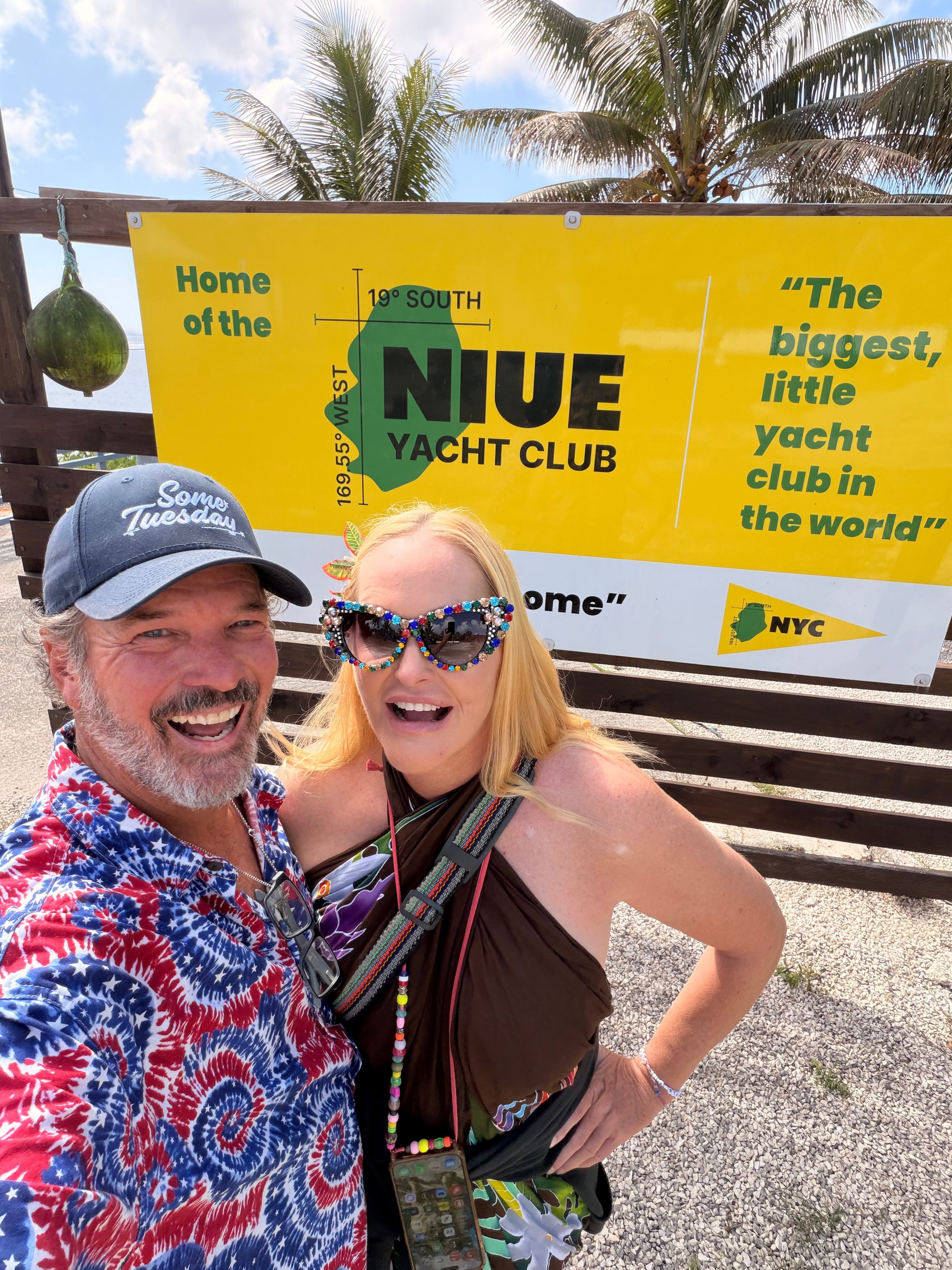
We almost didn’t go. Niue only has fifteen moorings, and our reservation was a week away. We were on the waitlist in case somebody else cancelled, but sailing west from Aitutaki in the Cook Islands we had only two reasonable options: anchor at Beveridge Reef and wait until our Friday mooring reservation, six days away. Or skip Niue and sail directly to Tonga. We are SO glad we didn’t skip it. Niue won a spot in our hearts and became our favorite island so far!
But getting there meant nearly a week anchored basically in the middle of the ocean, on top of an old volcano and inside a submerged coral reef atoll - known as Beveridge Reef. Only a few dozen yachts visit every year because there is no protection from the wind and at high tide, the swell overtops the reef and pushes residual waves through the lagoon, making 16 hours out of every 24 seem like living inside a washing machine.
Beveridge Reef is impossible to see, other than the surf breaking over the submerged reef, so it has been the site of numerous shipwrecks over the years. And not just ancient maritime history, either! The most recent wreck was a family sailing a catamaran similar to ours, who wrecked in 2017. Luckily, there was another boat already anchored inside the reef, and they were able to rescue them. This place is not for the faint of heart!
Beveridge was extraordinary in its own way, however. Absolutely remote. Being anchored on a 16-foot deep patch of sand in the middle of an old volcano with no land in sight felt surreal! We got used to judging the time of day by the motion of the boat. Just a knowing look at each other, “Here it comes….” was enough to announce the arrival of flood tide. At low tide, we got about four hours of peace, twice a day.
I considered going scuba diving, but decided the consequences of even small problems might be too high. We were the only boat there, for hundreds of nautical miles, so a stalled outboard would likely mean being washed out to sea and an almost certain death sentence. So we stayed on board. And it was worth it!
We departed for Niue on Thursday afternoon, August 27, sailing out of the pass and into massive swell - nearly 4 meters at 8 seconds. Thankfully, we were sailing NW and the swell was from the SE, so it was directly behind us - what sailors call a “following sea.” This means that even though the waves were huge and steep, because we were going in the same direction, the sailing was still relatively comfortable. Massive, 12 foot waves still rose over the stern, staring down at us from above, but then washed harmlessly under the keels and continued their journey north.
Wind was also from the SE at 20 knots, which meant sailing “dead downwind,” or with the wind angle at 180 degrees from the bow. I flew the regular genoa and set the sails wing-on-wing, with the mainsail on a starboard tack and the genoa on the opposite side of the boat on a port tack. I used the autopilot to sail slightly to the lee at 170 degrees of true wind angle. I had learned on the Pacific passage that sailing at 180 is hazardous because if the boat yaws enough to backwind the mainsail, it will push it violently to the other side and perhaps cause damage. I snapped two battens that way with more than 1,500 nautical miles to go back in April! But my skills continue to improve, and this sailing was glamorous and delightful.
Around 11am Friday, August 28 we doused the sails and motored into Niue harbor, picking up our assigned mooring ball like a boss! Meghan takes the helm now when mooring and she’s getting really good at it! It’s an intricate dance to get it right.
I stand on the starboard bow with a boat hook (a long pole with a hook on the end) in my hand. The mooring buoy is floating in the water and it has a large eye in the end of the line. To pick it up, Meghan has to steer the boat perfectly and put me right next to the buoy so I can pick it up with the hook. Once I’ve got the mooring line in hand, she goes astern (reverse - remember, boats don’t have brakes) in order to bring the boat to a stop while I thread our dock lines through the eye and drop it back in the water.
Sometimes we need to pivot the bow one way or the other as I adjust the lines, and all this communication happens over our wireless headsets, which have been a lifesaver. The product is aptly named the “Marriage Saver!!” We’ve now picked up many moorings and we’ve both gotten good at our jobs - Meghan calls it a “clinic.” It’s just another example of the importance of teamwork out here!
Once we had the mooring, I hailed Niue Radio on the VHF and requested permission to come ashore and clear customs. It was granted and I jumped in the dinghy with all our documents. The customs official was waiting on the dock and after 10 minutes of friendly chatting, he stamped our passports - on the dock, on the hood of his car!! - and said “Welcome to Niue!”
This was the easiest customs clearance procedure yet, and it was emblematic of this island. The people are the most friendly we’ve encountered anywhere and always eager to help and make sure you have a great experience on their island. It is the epitome of a high-trust society where your handshake is all that is needed. In fact, I rented a car and the owner of the rental agency pointed at the car and said “keys are in it!” There was no paperwork, no driver’s license check - nothing. He didn’t even know my last name.
The warmth of the people, the trust, and the natural beauty would combine to make this our favorite island yet. Niue is the second smallest sovereign country in the world, right behind Vatican City, and it shows in the spirit of community. Everywhere we went, strangers would wave and smile. We pulled over four or five times to look at the map while touring the island and every single time, someone would pull over next to us, roll down their window, and ask if we needed help or they could assist with directions. Every time! I’ve never experienced anything remotely like it anywhere on the planet!!
Helpfulness is everywhere. Because there is no fringe reef and the harbor is unprotected, they have a unique setup where you must use a crane to hoist your dinghy out of the water and store it on the pier while ashore. That works fine for most folks, but our dinghy is over 700 pounds with the outboard, so moving it around on their small dolly was impossible. The first day, our friends on The Big Dog helped lift it onto the dolly and move it (they have five kids aboard, three of whom are young men over 17, so we had the muscle!). But that wasn’t a permanent solution, so I got in touch with Keith, the commodore of the Niue Yacht Club.
The NYC bills itself as the smallest yacht club in the world and the only one where none of its members knows how to sail! It’s a social club and exists to serve the yachties visiting the island, but it’s a volunteer-driven labor of love! I reached Keith, the Commodore, and he jumped into action, arranging special permission with the Department of Fisheries for me to swing the dinghy around to the other side of the pier and leave it there, right where the crane sets it down. That enabled Meghan (who became the crane operator) and me to hoist the dinghy with just the two of us.
Keith also offered to pick us up at the dock and drive us to pick up our rental car. On the way, he offered copious advice about things to see and do and shared a number of tourist pamphlets. He was truly wonderful, and we rewarded him with a Some Tuesday ball cap!
Helpfulness really is just built into their culture, and with only 1,400 inhabitants on the island, I suppose that helps.
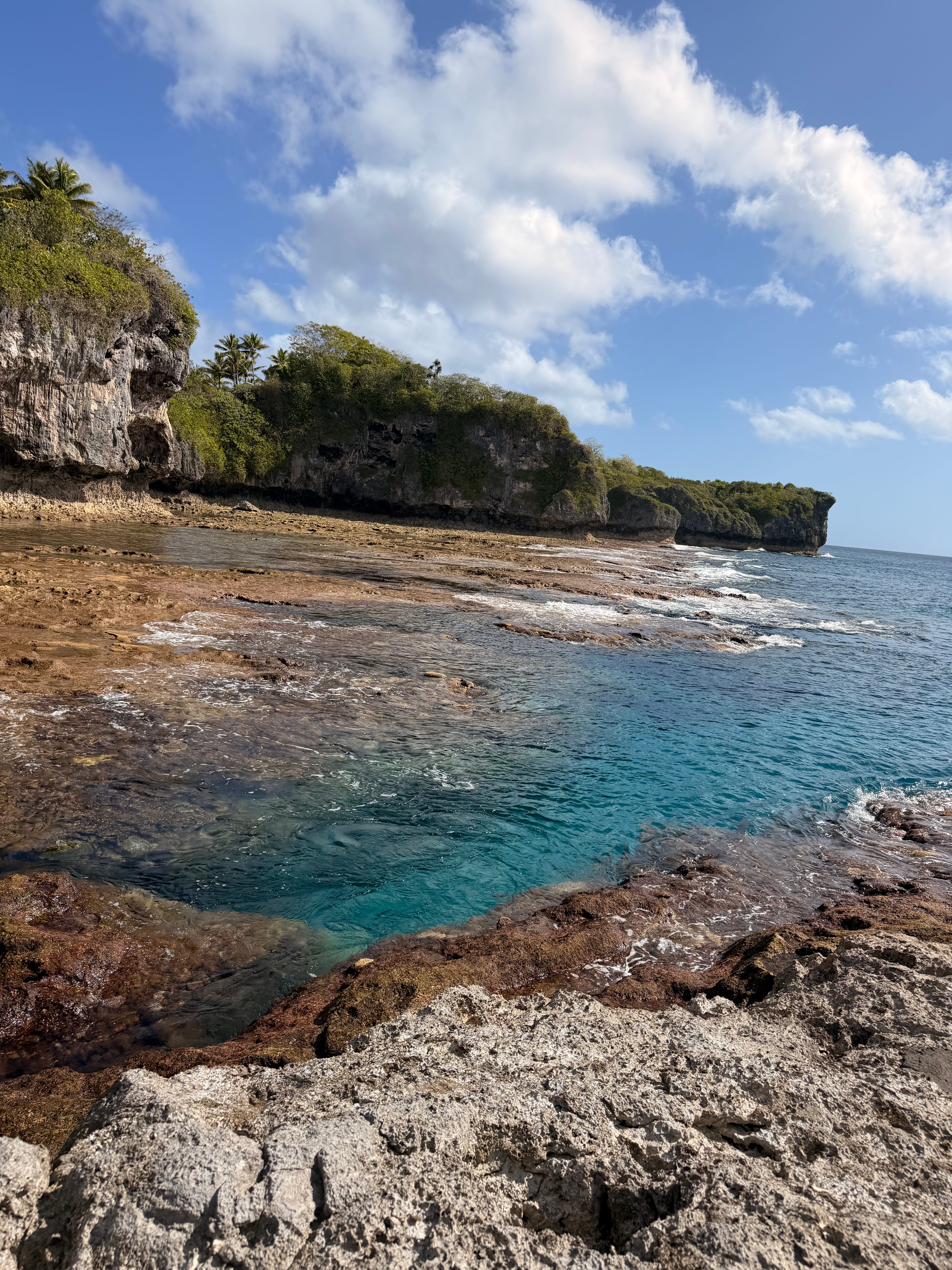
The island itself is limestone and rises only 68 meters above sea level at its highest point. As we approached from the sea, Meghan had exclaimed, “It’s flat as a pancake!!” And that flatness would be appreciated with all the hiking we would do over the next 10 days! Seaside caves were carved out of the limestone, and in other places endless miles of tall pillars evoked a Lord of the Rings comparison.
I asked Meghan what her favorite part of this island was, and she said it was the “whoa” factor. She explained that around every corner and every bend in the road there seemed to be a “whoa!!” Some aspect that was new and visually stunning, completely geologically different from the last “whoa” and unique, awaited us, seemingly without end.
In our rented car, we took a driving tour around the whole island. It took us about three days, because we stopped frequently to see the sights. Like the Cook Islands, they drive on the left there, which of course meant lots of unintentional activation of the wipers when I really wanted the turn signals!
The perimeter of the island has numerous “Sea Tracks,” which are trails that go down to the sea, and every single one is different and unique. Some can be driven and many must be hiked. We absolutely LOVED exploring all of them - and we made a point of doing every single one!
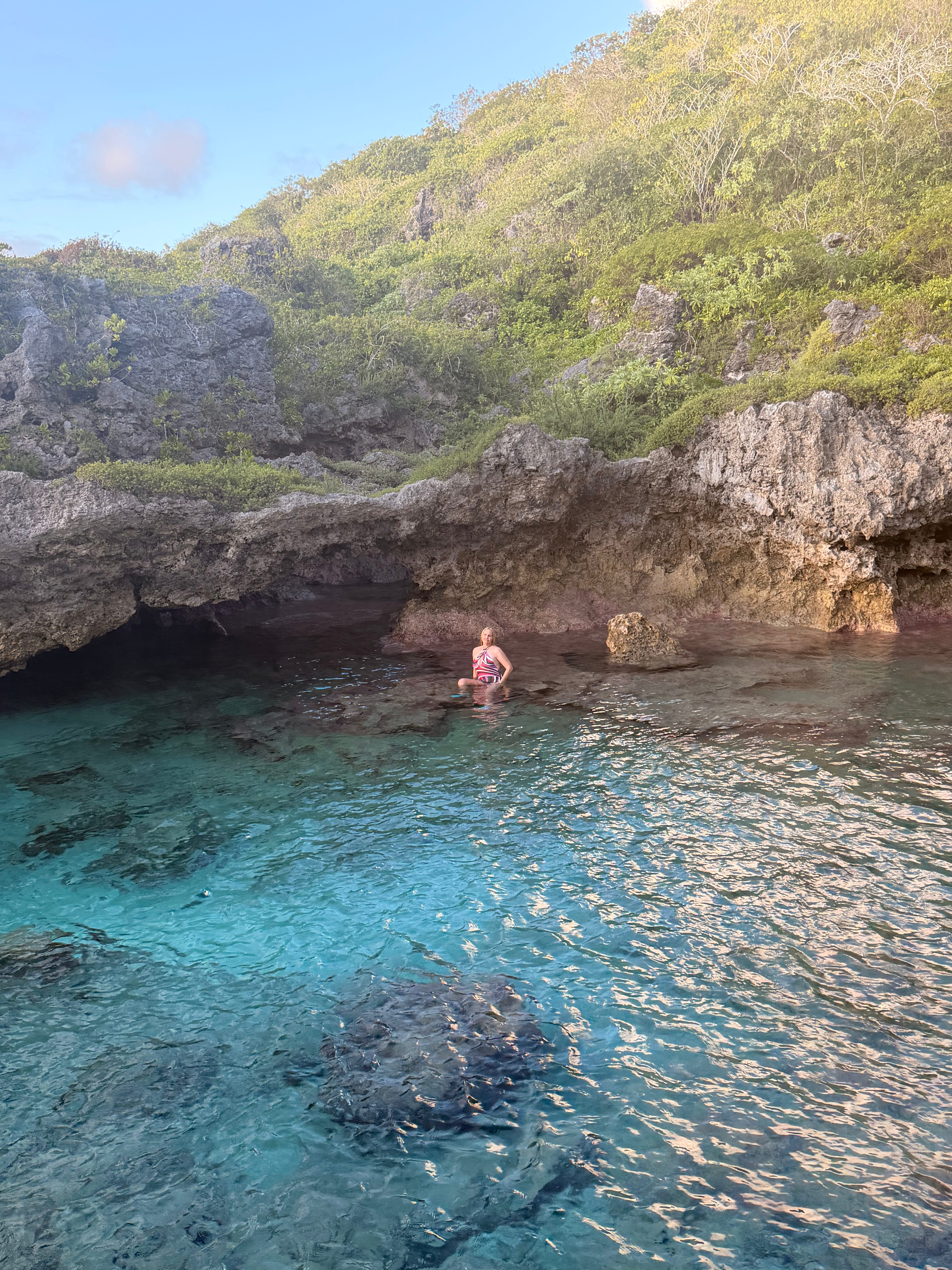
Some descend to seaside caves that have been carved into the limestone, many of which have huge caverns to explore. Many can be treacherous, and would never exist in the US, which is a shame. Sure, if you’re careless you could hurt yourself, but this too feels like trust. Their society is trusting you not to be a jackass! The sea tracks are maintained, too, with fresh concrete and sometimes stairs, ladders, or even ropes put in place to enable you to traverse the terrain. One ladder was over 30 feet high! One cavern had a rope fastened into the limestone, enabling you to carefully walk/lower yourself down into the cave. Others were more simple, with steps down to a sandy beach. Yet others descended to natural pools, protected by the shoreline from the open ocean and offering incredible snorkeling or swimming.
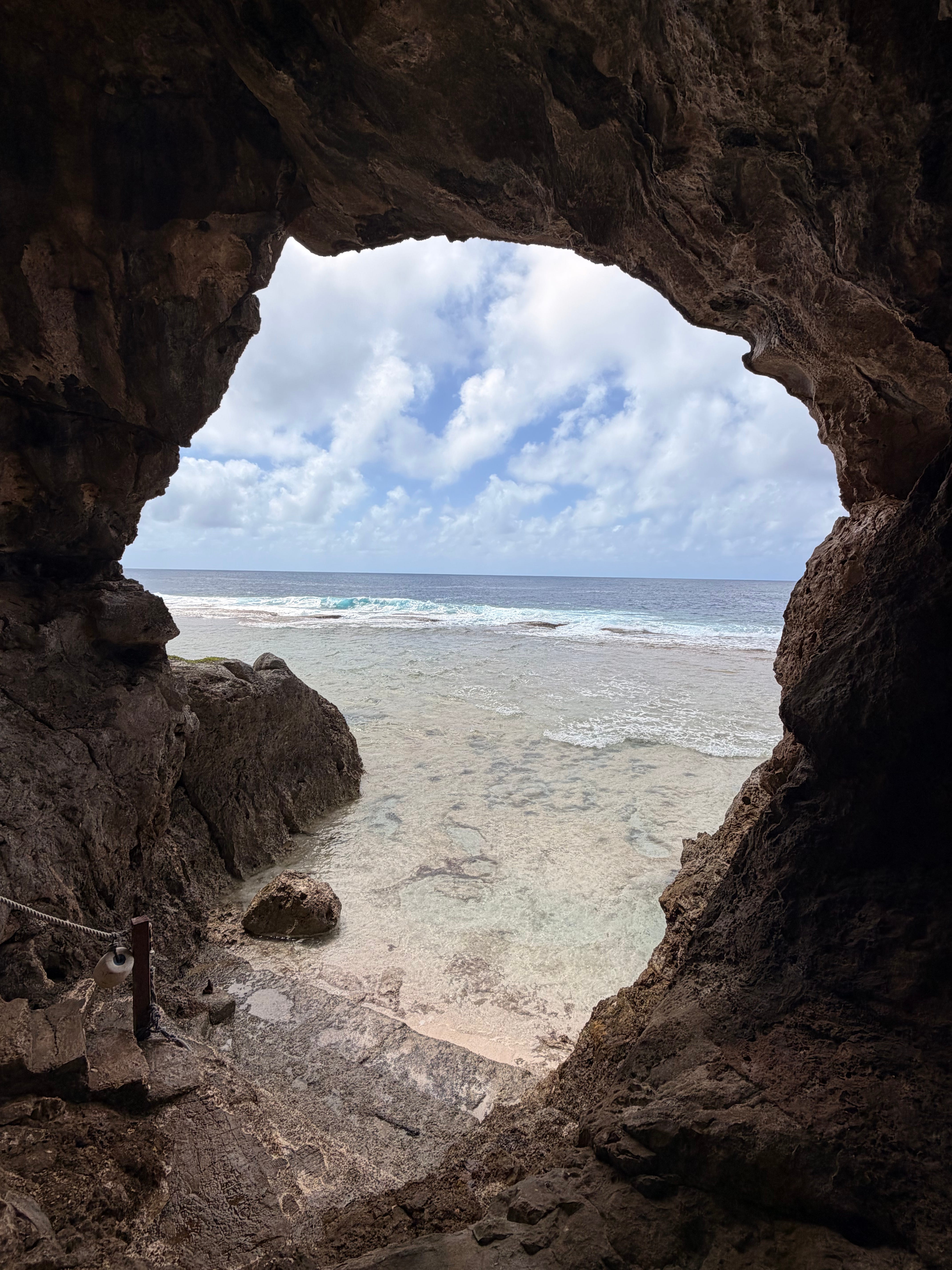
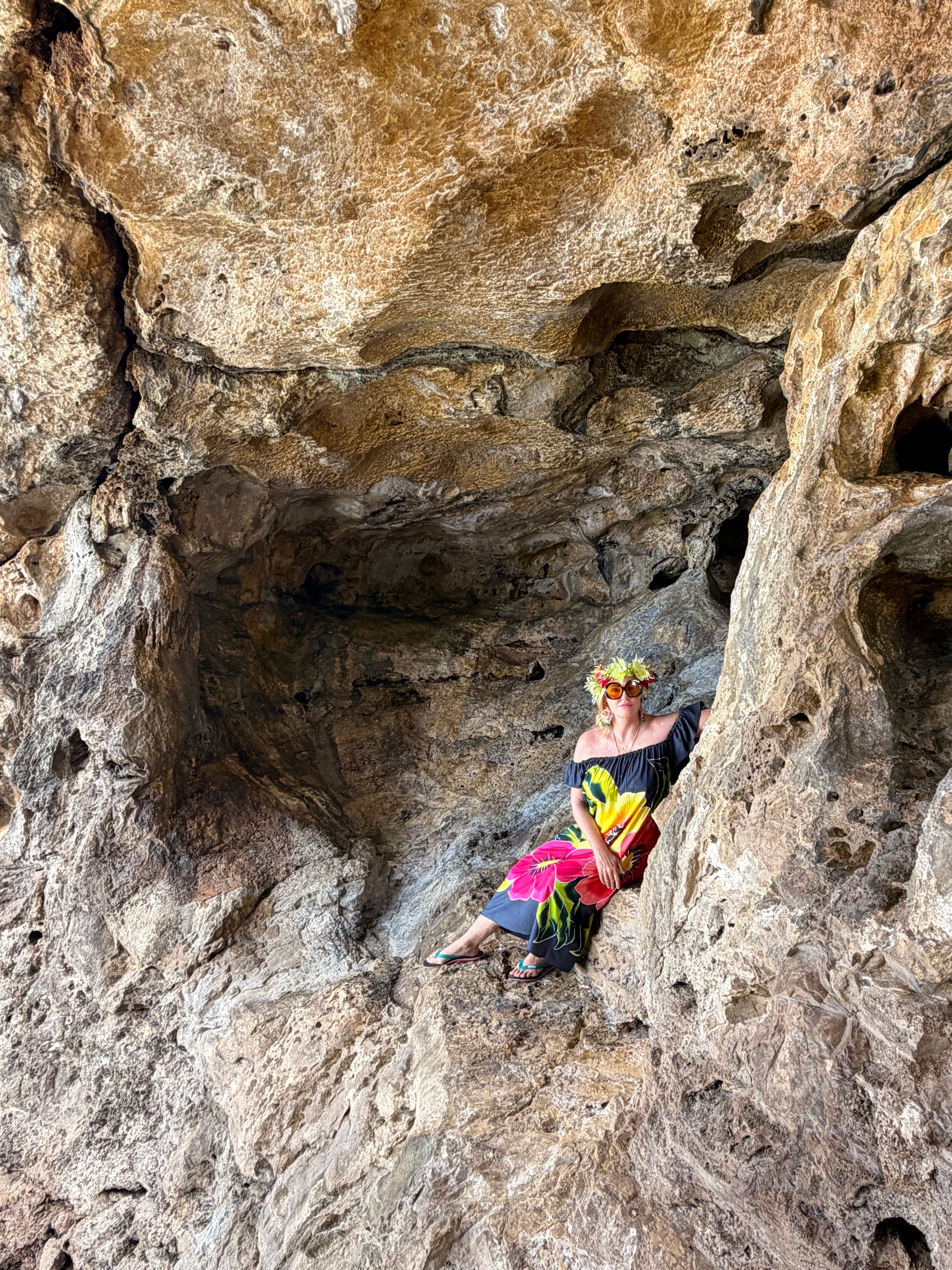
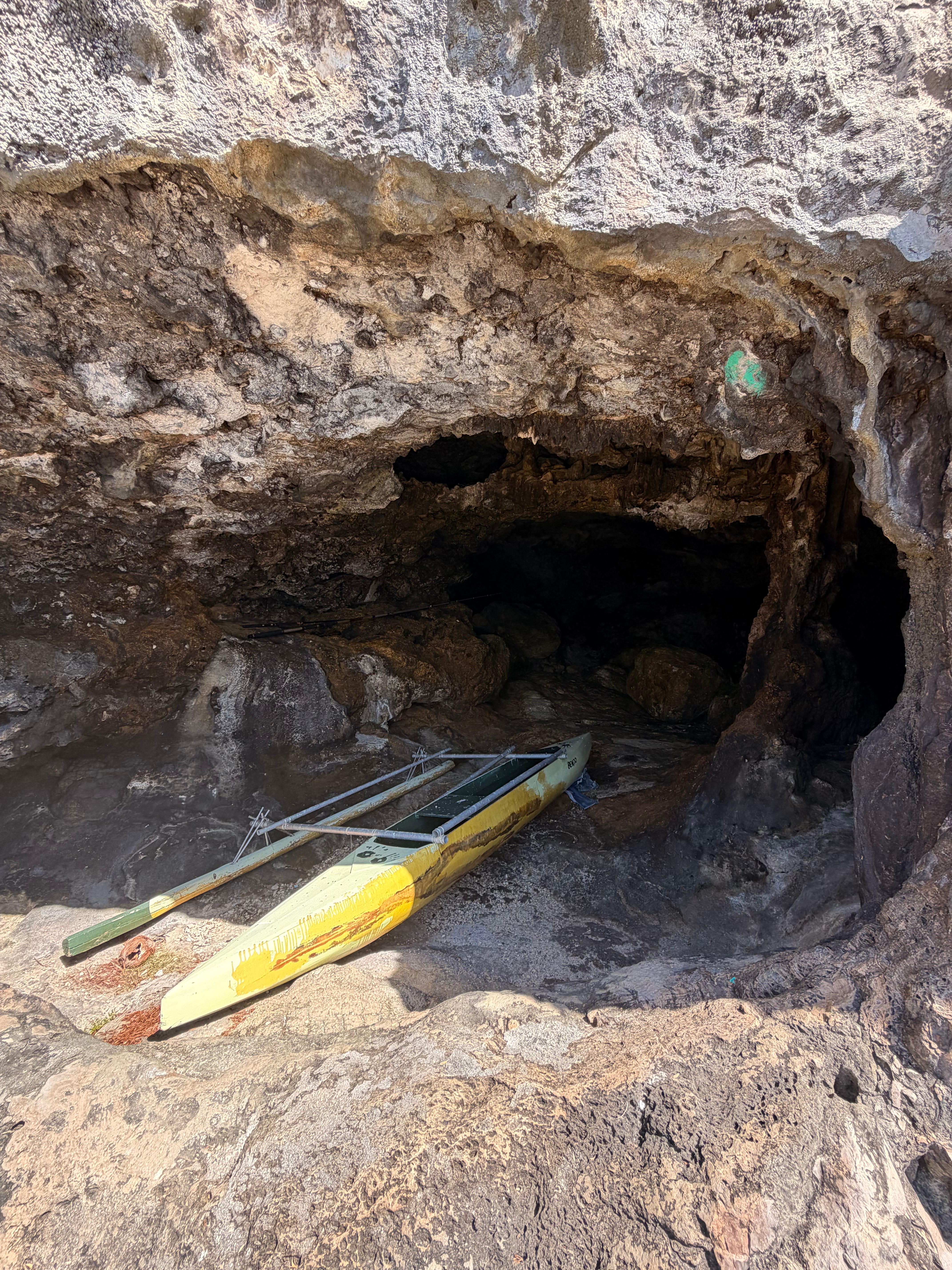
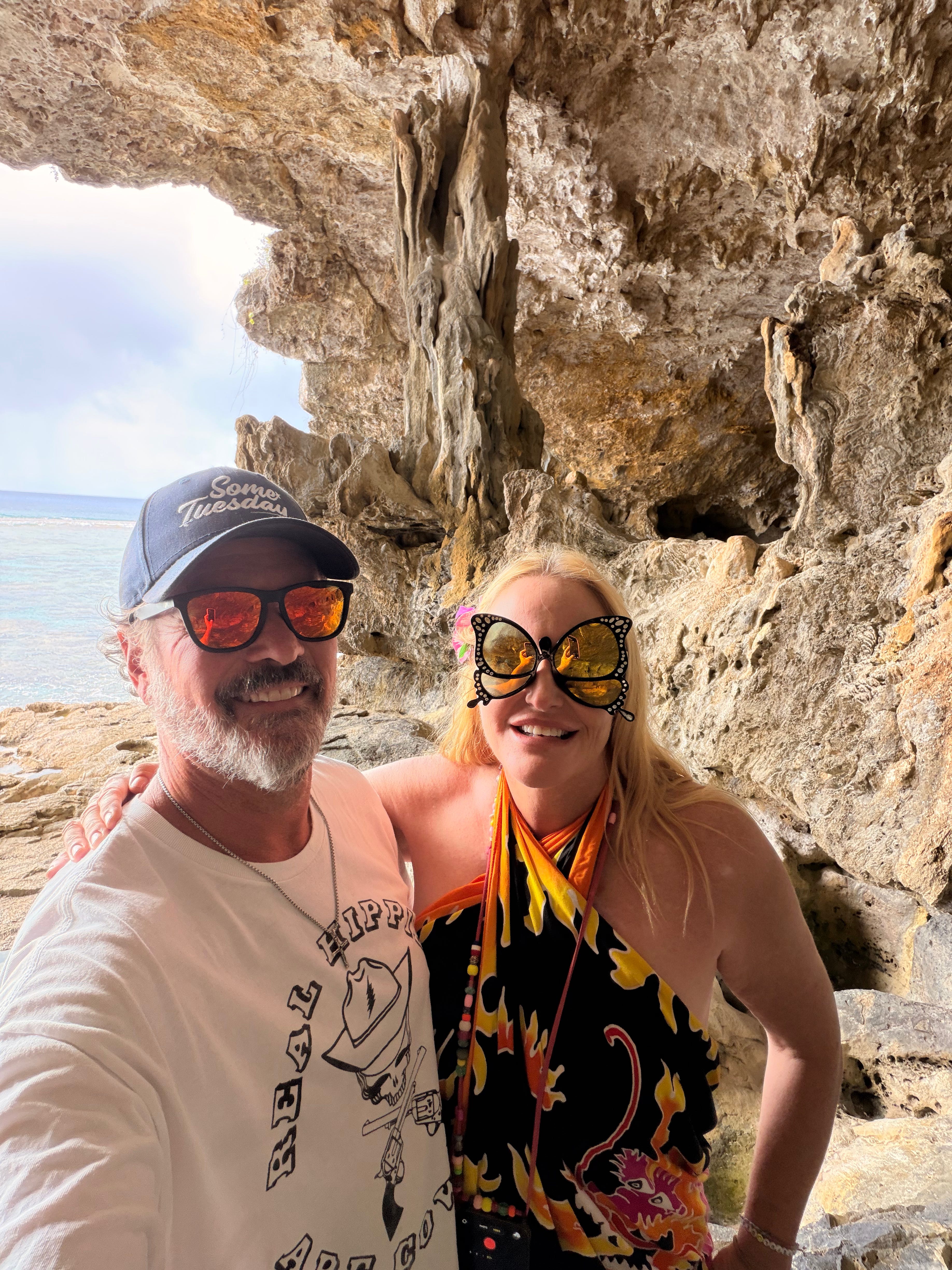
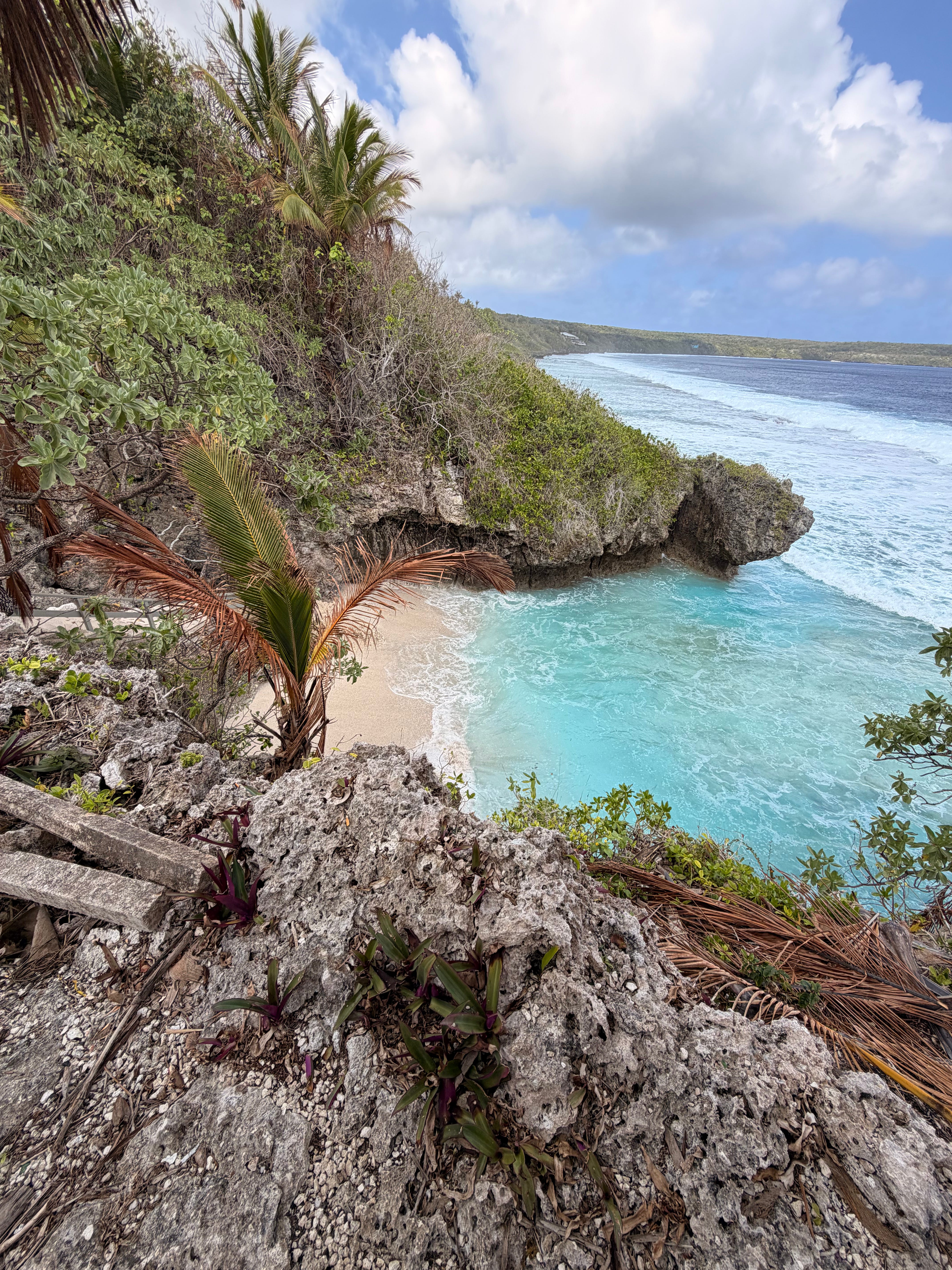
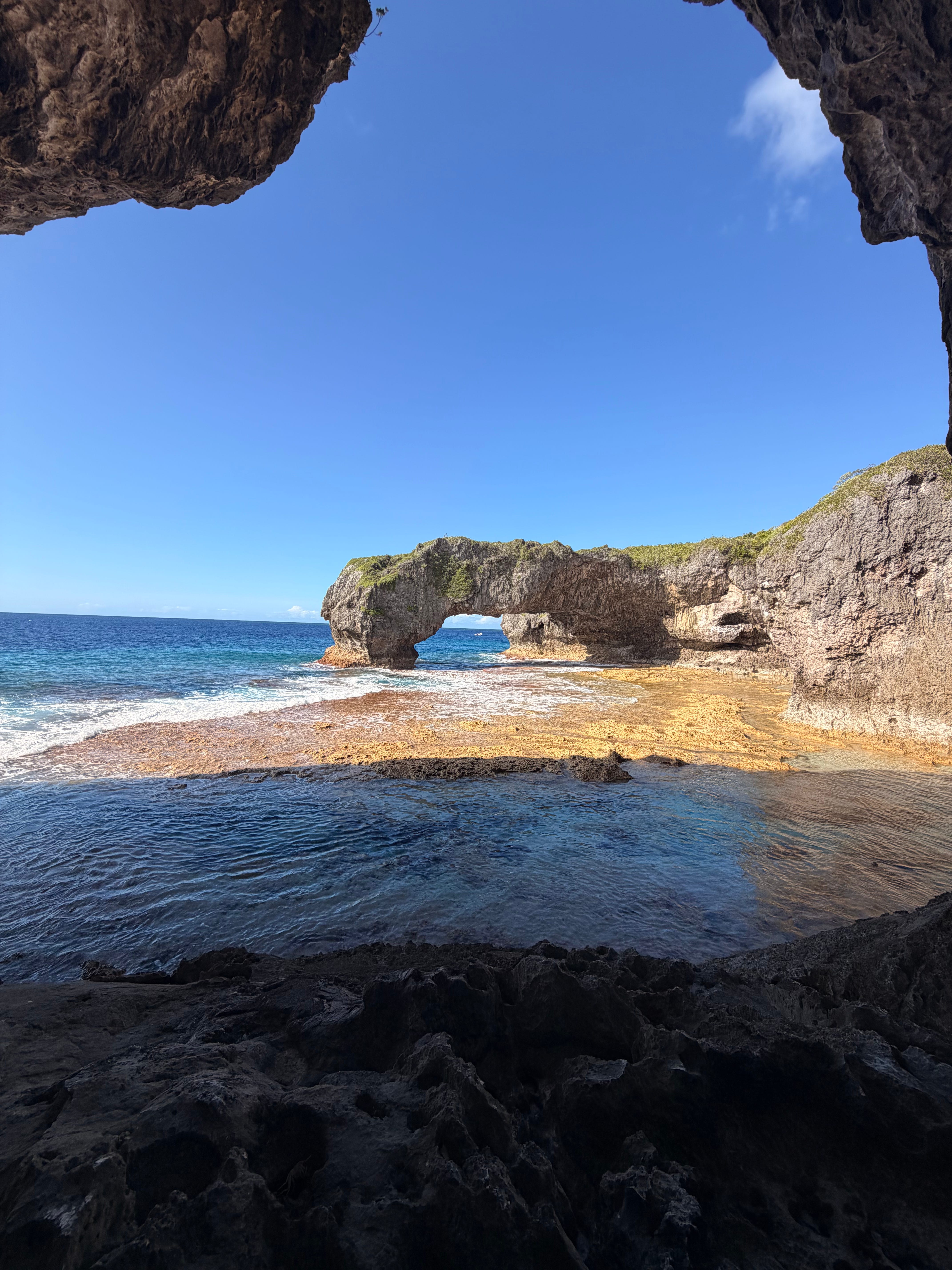
One was a burial cave that had been preserved to show the way Niueans buried their dead in times gone by. In this cave were numerous human bones, with nothing between them and the visitor other than a rope railing. And yet, the bones were undisturbed. That show of respect was impressive, and so sadly lacking in most of the world.
I thought of my sons Hank and Carter often on Niue because of all the adventure. We had many, many good years of camping and exploring, often way off-grid in the deserts of California or the forests of Pennsylvania, and they would have dearly loved all the adventures in Niue. They are coming to Fiji for Christmas and I truly can’t wait to wrap my arms around them again, as it’s been a full year since I’ve seen them now!! Luckily, Starlink enables frequent video calls.
Driving around Niue, we noticed graves everywhere. It’s impossible to drive more than 1000 feet without seeing a grave on the roadside, and nearly all of them are well-tended with fresh flowers. We were so impressed by this that we asked one of the locals about it and learned that this is not only a way to honor their dead, but also how they demonstrate an ongoing connection with the land. No outsider can buy land here, and it is controlled by families that think of land more as an inheritance to be treasured and tended than to be owned. A well-tended grave demonstrates that this land belongs to the family and that it is still actively cared for. It’s a visual cue that you’re on land that is not yours.
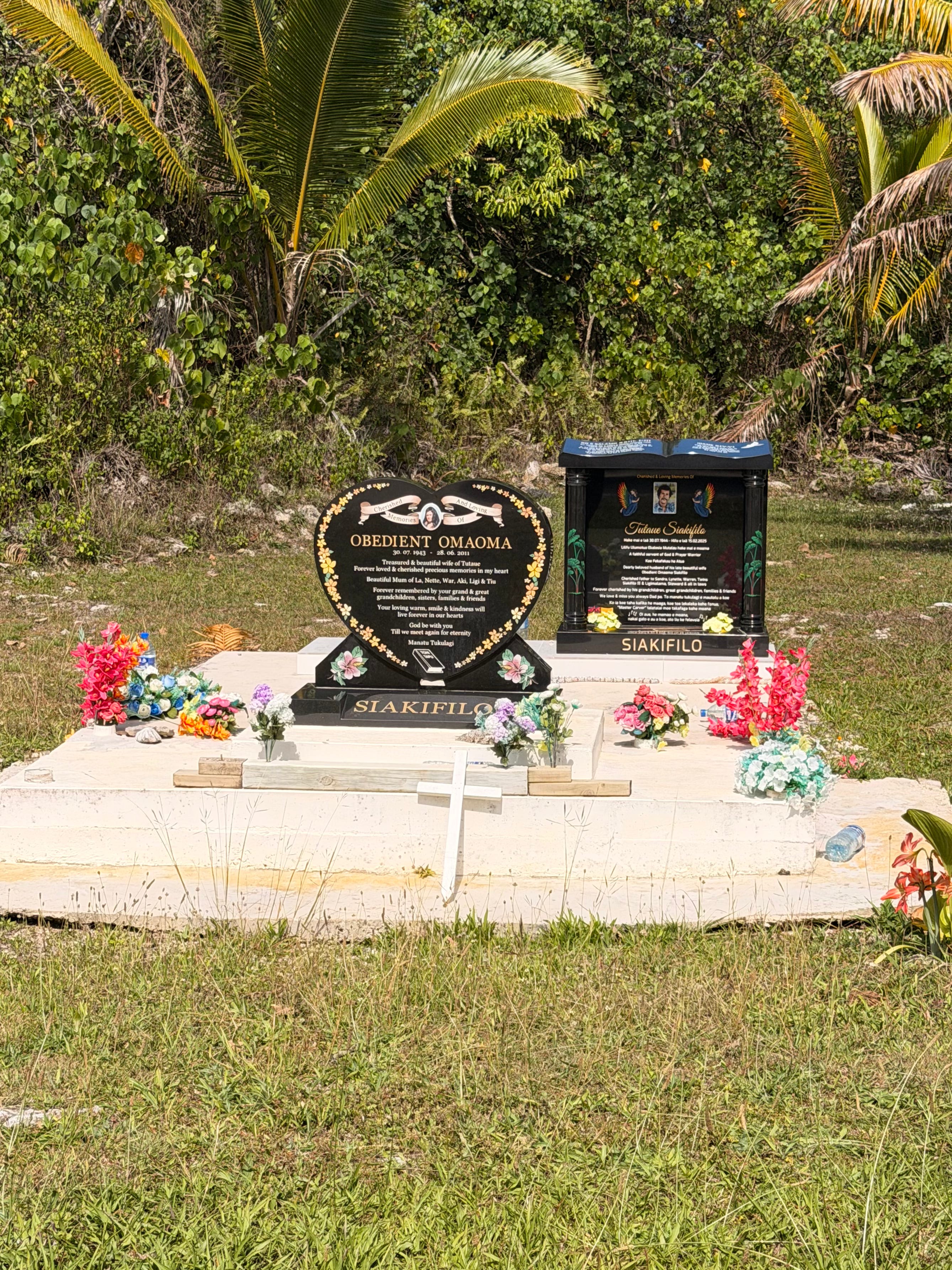
She explained to us that if someone accidentally stumbled upon someone else’s land, they would automatically recognize that when they saw grave markers and would know that they didn’t belong there. The concept was similar to karma and she said that everyone would know that bad things would happen to them if they didn’t respect another family’s land. It wasn’t about fences - it was about respect, both for each other and for the land itself.
She also explained that her land had come from her father, and described a bit about the family history back to her father and his father. I wish I could remember her name, but she is the owner of Hio Cafe (Hee-oh) and she chatted with us for quite some time. As she was explaining how land was treated, it became clear she didn’t think of herself as the “owner” but rather the steward. She said her kids would live and work the land some day, and if they chose not to, well, someone would come along who wanted to work it and care for it. It was remarkable, but the most impactful thing she said, which I’ll never forget, was, “We’re rich. Just look around at what we have!”
No further explanation was necessary. She clearly did not mean financially rich, as existence on Niue is generally quite modest, but I think she’s right. She and her 1,400 fellow citizens are much richer than most of us can ever dream of becoming.
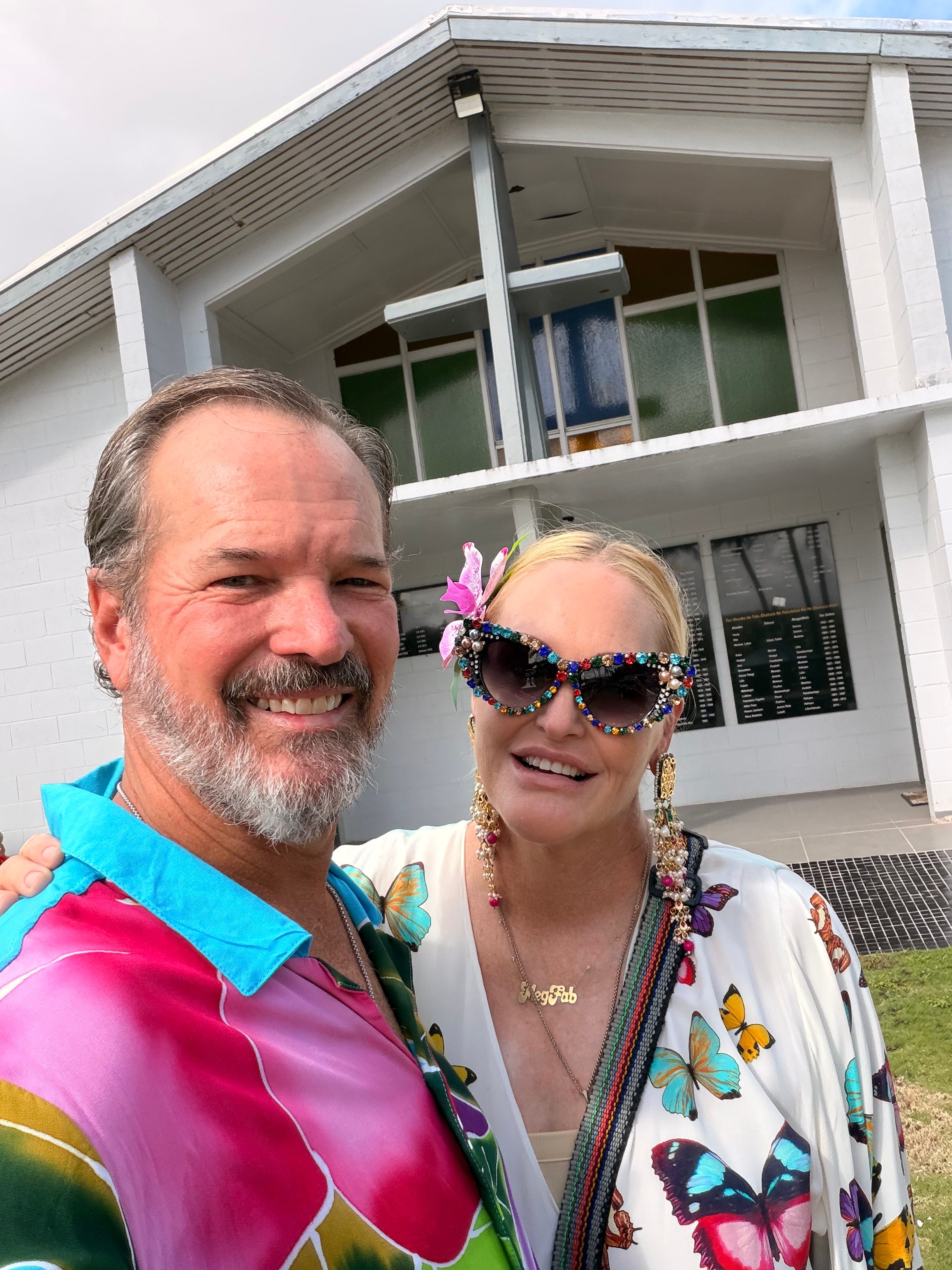
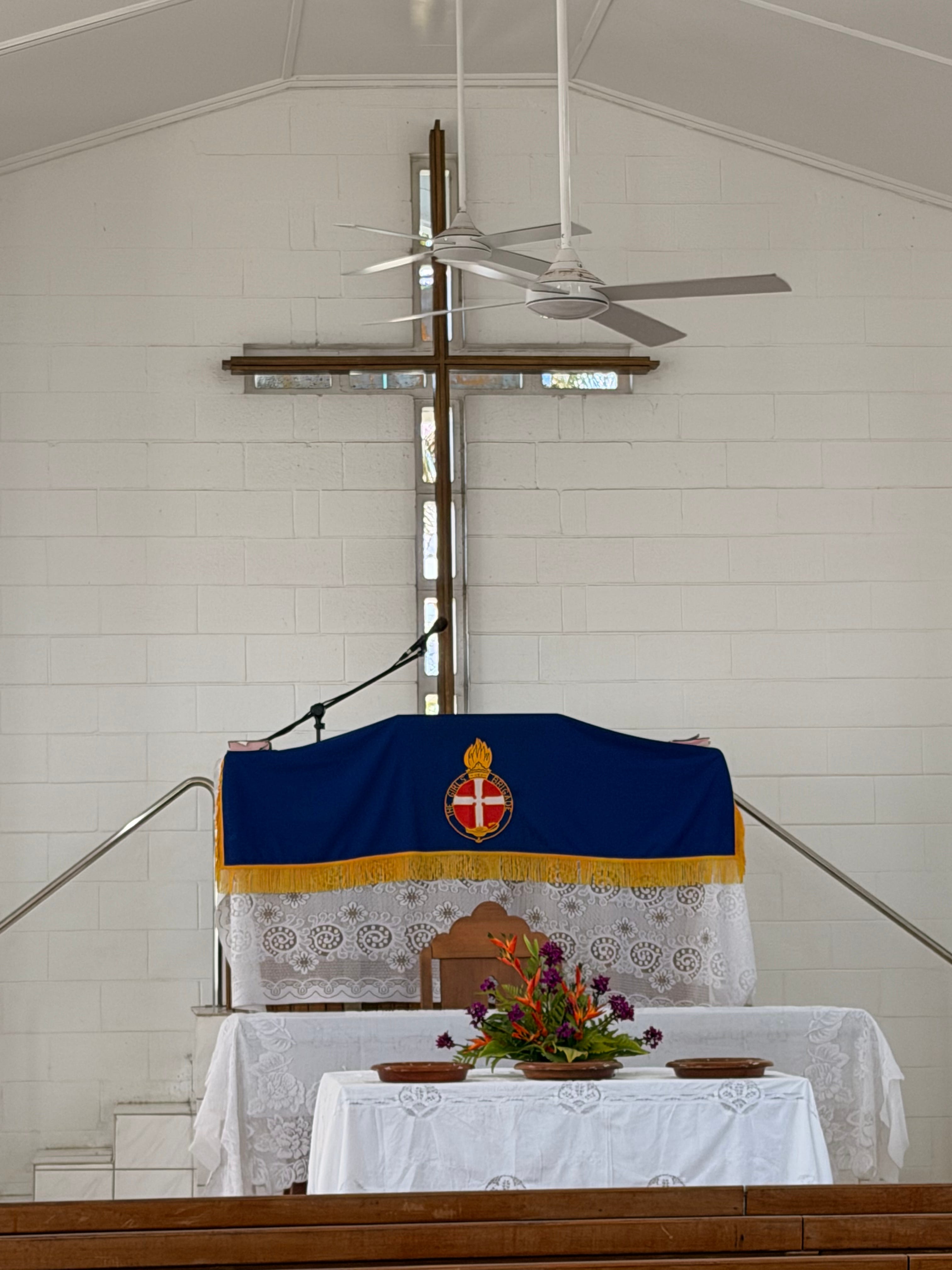
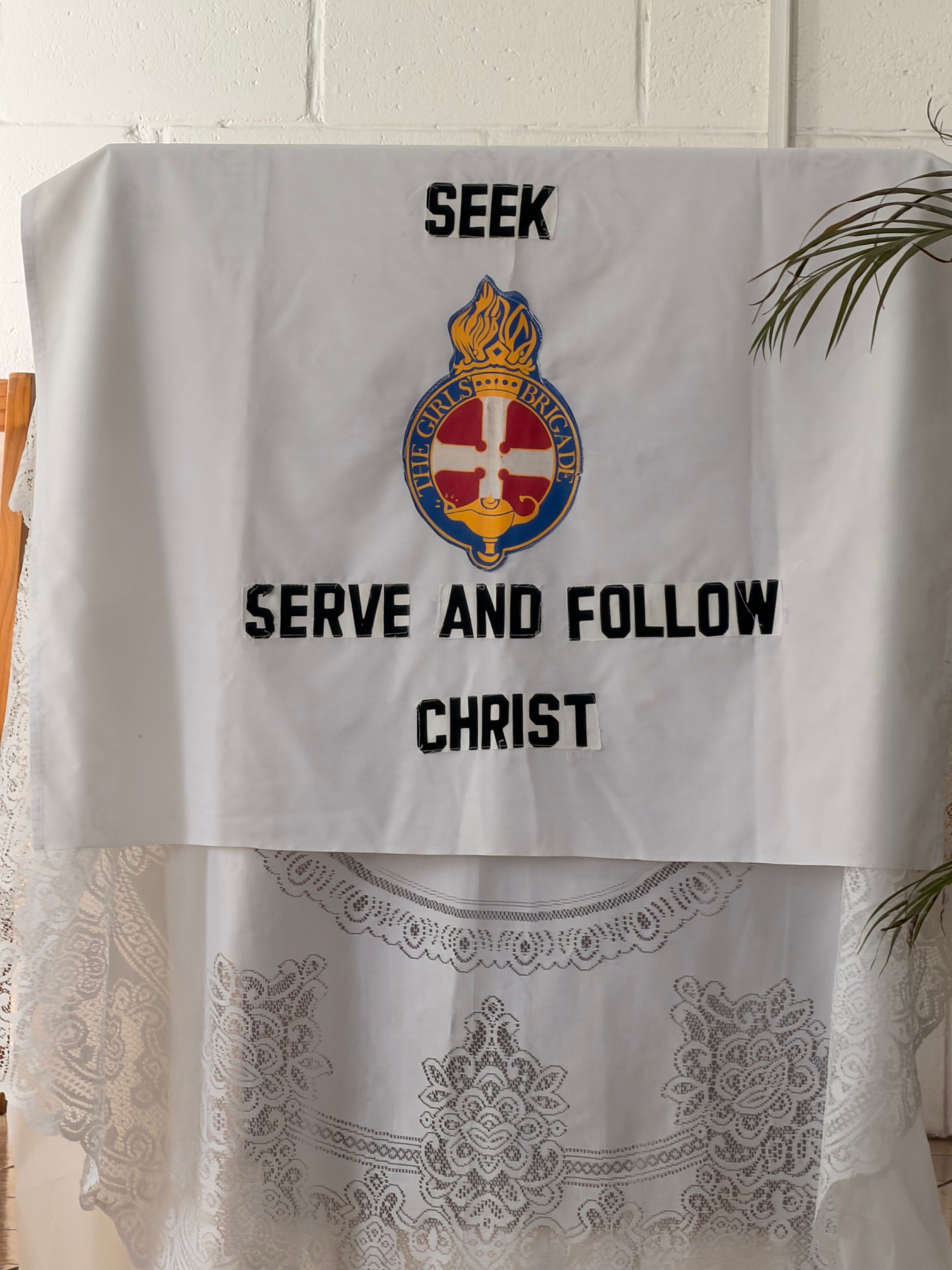
Christianity is an important part of the culture in the South Pacific, and Niue was no exception. It’s refreshing and inspiring that faith is an integral part of daily life in these islands, and social life is built around church. After attending church, we often recognize other parishioners around town and exchange smiles and waves. The service in Niue was mostly conducted in Niuean, with a bit of English thrown in here and there, allowing us to keep up. The high-trust, friendly, warm, loving and kind atmosphere is doubtless connected to the teachings of Jesus Christ, which is incredibly refreshing. The world would be a better place if more people sought to imitate Jesus, and Niue is a living testament.
After the outrageous prices of French Polynesia, the relatively reasonable cost of living was a welcome relief. Don’t get me wrong - it’s an island and everything is still expensive. A good meal in a restaurant would be comparable to pricing in Los Angeles. But overall, it was beyond reasonable, even when considering the departure tax of $350 NZ dollars (about $210 US). That surprised me at first, but I quickly reconciled it to all of the sea tracks and other recreation we had enjoyed at absolutely no charge - available to all.
Another odd observation about cost: there were trash cans everywhere. Every single sea track, sometimes quite far from where a truck could access them, had at least one trash can available. There was always one handy when in town or anywhere in Niue. And guess what? No litter - anywhere. I don’t think I saw so much as a stray bottle cap. The people keep their island clean, their yards are well-tended, and even though there are wild chickens everywhere, everything feels clean. The grittiness of Tahiti was nowhere to be found. Can you put a cost on that? All in all, Niue gave us the best value for our dollar yet!
Hio Cafe was definitely one of the highlights. The owner—and the glint in her eye—made it really special. We visited the first time for Trivia Night, which was rambunctious and fun, with a delightful mix of locals and cruisers, and everybody laughing and meeting new friends. Our second visit was for Uga, the culturally-important coconut crab which is a staple of the local diet. Reservations are required and we had heard Uga Night at Hio was the best on the island.
We arrived, ordered a beer and sat down. We were having a wonderful time, but soon enough we wondered why 30 minutes, then 45, then 60 had gone by with nothing yet to eat! As we were wondering about this to each other, the owner came out and sat down at our table to sheepishly explain that our dinner had escaped.
Yes, escaped.
The Uga crab is a very large and powerful crab, and she went on to explain that it had torn a hole through the sac in which it was stored, then run out of the kitchen and into the woods, where it vanished among the trees. We laughed and found this story absolutely hilarious. We asked if she would say it again on camera, and she politely and modestly declined. She then explained that her husband had gone to fetch another Uga and she hoped he would be successful and return shortly.
We thought this was so funny, we couldn’t possibly be angry. So we ordered another round and laughed with each other about how preposterous it was that our crab had physically torn through its restraints and regained its freedom! Somewhere in the woods was a large Uga, gloating about his success and laughing at our hunger!
A few minutes later, her husband came to the table with the replacement. It’s a beautiful, crazy-looking creature and Meghan kept apologizing to it that it was about to be cooked for our dinner. I shrugged and thanked God for our place at the top of the food chain! We were hungry! And soon enough, the Uga was back on the table, and the owner came back to teach us how to eat it.
She explained that you should break off a piece of the crab and “while keeping your hand supple” bang on the shell with a large metal spoon until it cracked and you could extract the meat. Meghan and I both found the word “supple” to be very amusing in this context, and it just added to the sublime enjoyment of this night. The crab meat was nutty tasting, due to its diet of coconut, and it was delicious all around. We very much preferred the claws to the body, but Niueans eat every single part of it - saving some parts for breakfast the next day.
As we returned to the dock and operated the crane one last time before returning to Some Tuesday, we reflected on what an incredible week it had been. The mooring field had a waiting list before we arrived, then dwindled until we were the only boat. Now it was filling up again. Cruisers seem to come in waves! The pace of the island and its colorful life would continue on without us.
As we winched up the dinghy onto Some Tuesday’s davits, we reminisced about how much we had enjoyed this unique treasure of a country - a country we had never even heard of just a few months ago! We got the boat in order, and battened everything down to prepare for a three-day passage to Tonga - our next port of call. The seas would be huge - over 3.5 meters, sailing nearly due west and again enjoying a following sea. We looked forward to a comfortable passage and to the best opportunity on the planet to swim with humpback whales!
The journey continues….