Days 188 -199 (June 8 - June 19, 2026) of our five year circumnavigation
272 nautical miles sailed from Apataki to Rangiroa to Tahiti
7,885 nm total since our December 3, 2025 departure from Los Angeles
Rangiroa is the largest atoll in the Tuamotu Archipelago and one of the largest atolls on Earth. Its lagoon spans 558 square miles at 50 miles long and up to 20 miles wide. Total land area is greater than 50 square miles, including hundreds of motus. RGI airport has daily flights from Tahiti, so this is one of the few atolls that is reachable by conventional travel. That means tourism and a much better chance to find a beach bar with ice cold beer!
We arrived at Tiputa Pass just after daybreak. Meghan was fast asleep since she’d been tending Mr. Pickles and was certain she was spending her final moments with him. She was exhausted emotionally and physically, and I wanted to let her sleep. I checked “The Guesstimator” (an online tool whose very name inspires confidence!) to see what time the slack tide and was pleased to see slack at 7:27am (incoming turning to outgoing).
I should note here that, as I write this, nearly six weeks later, Mr. Pickles is still up with the sun every morning!! That little doggie has recovered and is showing his strength!
As luck would have it, we’d arrived at nearly the perfect time. Since it was just after 7am, I should still have a little incoming (flood tide) which would push us along, but not enough to cause any concern. I made the decision to go through the pass without waking Meghan. Provided no disaster befell us, I figured she’d be grateful!
The pass is wide, well marked, and deeper than 50 feet in most places. No trouble. There were numerous scuba divers and dive boats in the pass as we came in, but not close enough to cause any concern. As I came through the pass, I saw a long sand bar to starboard with a possible opening to motor between that bar and the reef to reach the anchorage, but I decided it was too risky. I continued along, keeping the sandbar and green navigation markers well to starboard and made a broad circle around in the lagoon before turning north again toward the main anchorage.
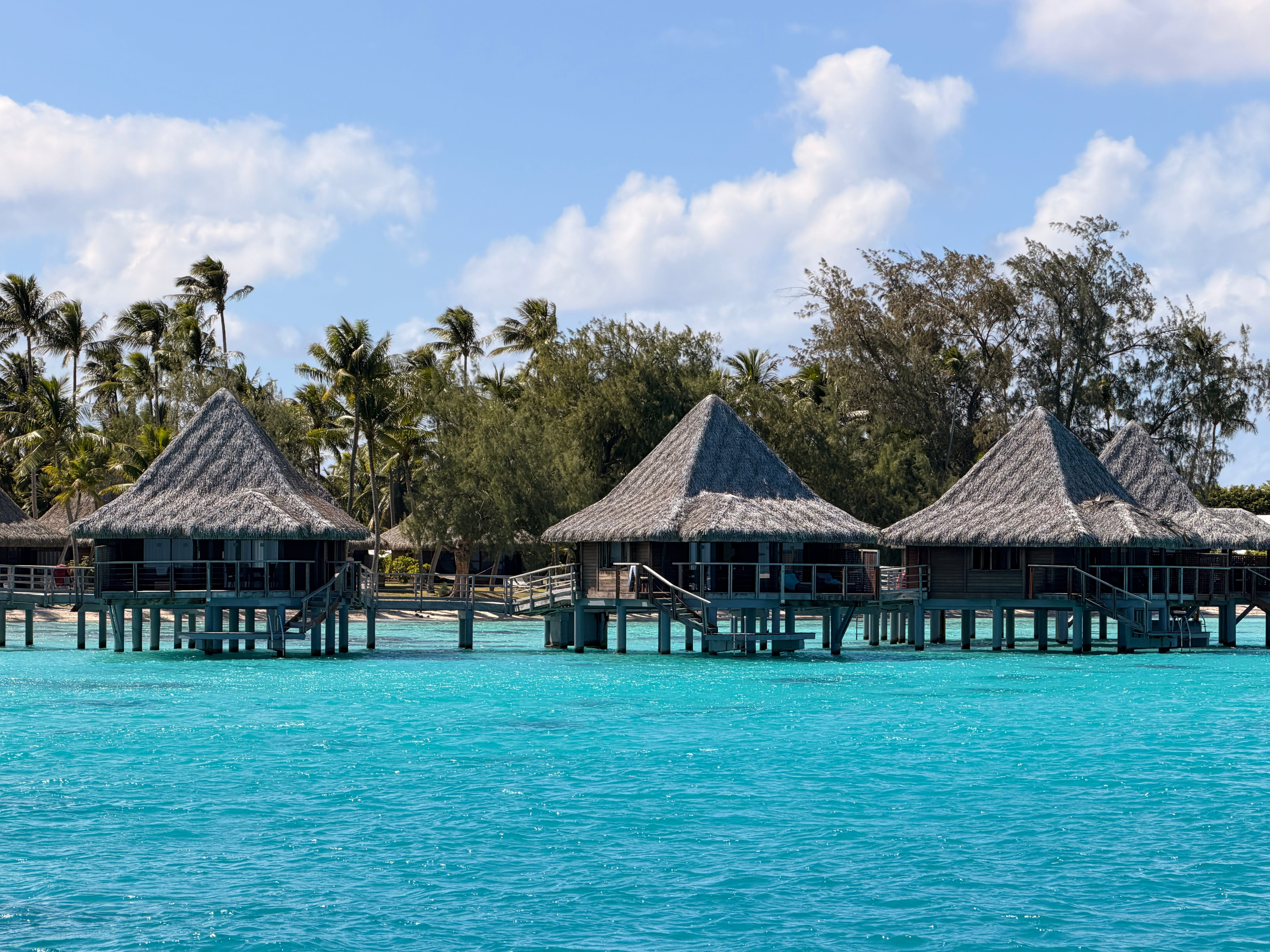
By 8am, the anchor was down in a beautiful spot, only a couple hundred feet from the overwater bungalows of the Hotel Kia Ora Resort (photo above). Beautiful. Once I was confident the anchor was well set, I crashed on the daybed in the aft cockpit and slept for several hours.
As it turns out, the Hotel Kia Ora was where our very good friends Pat & Missy Ready has spent their honeymoon more than 20 years ago! We sent them lots of photos to bring back good memories! In fact, it was our first stop once we had woken up from our naps. We were very excited to have a proper restaurant, with a dinghy dock and a cocktail menu! This life is more “raw” than I had expected, and it really makes you appreciate the simple things - like an ice cold Pina Colada.
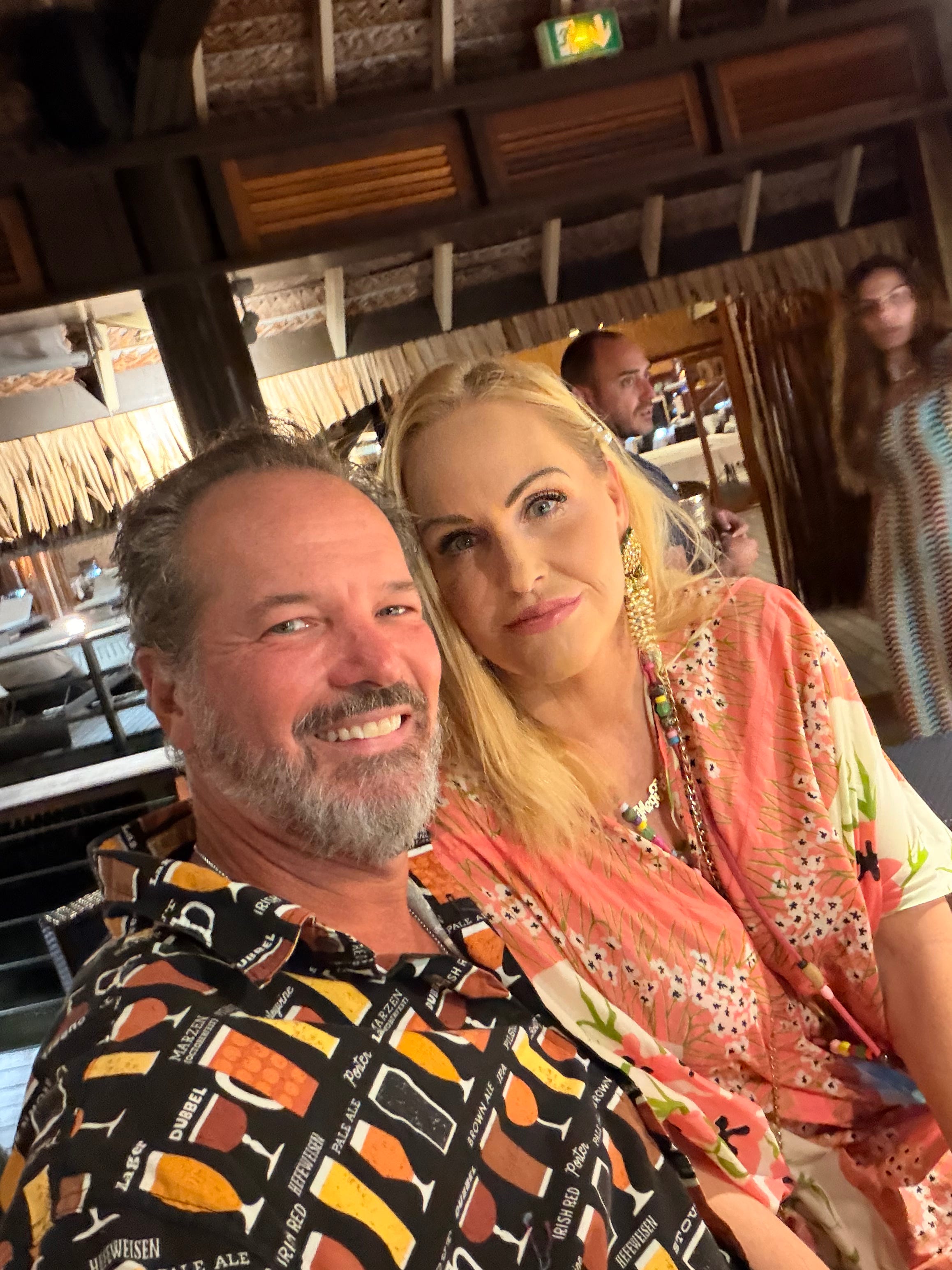
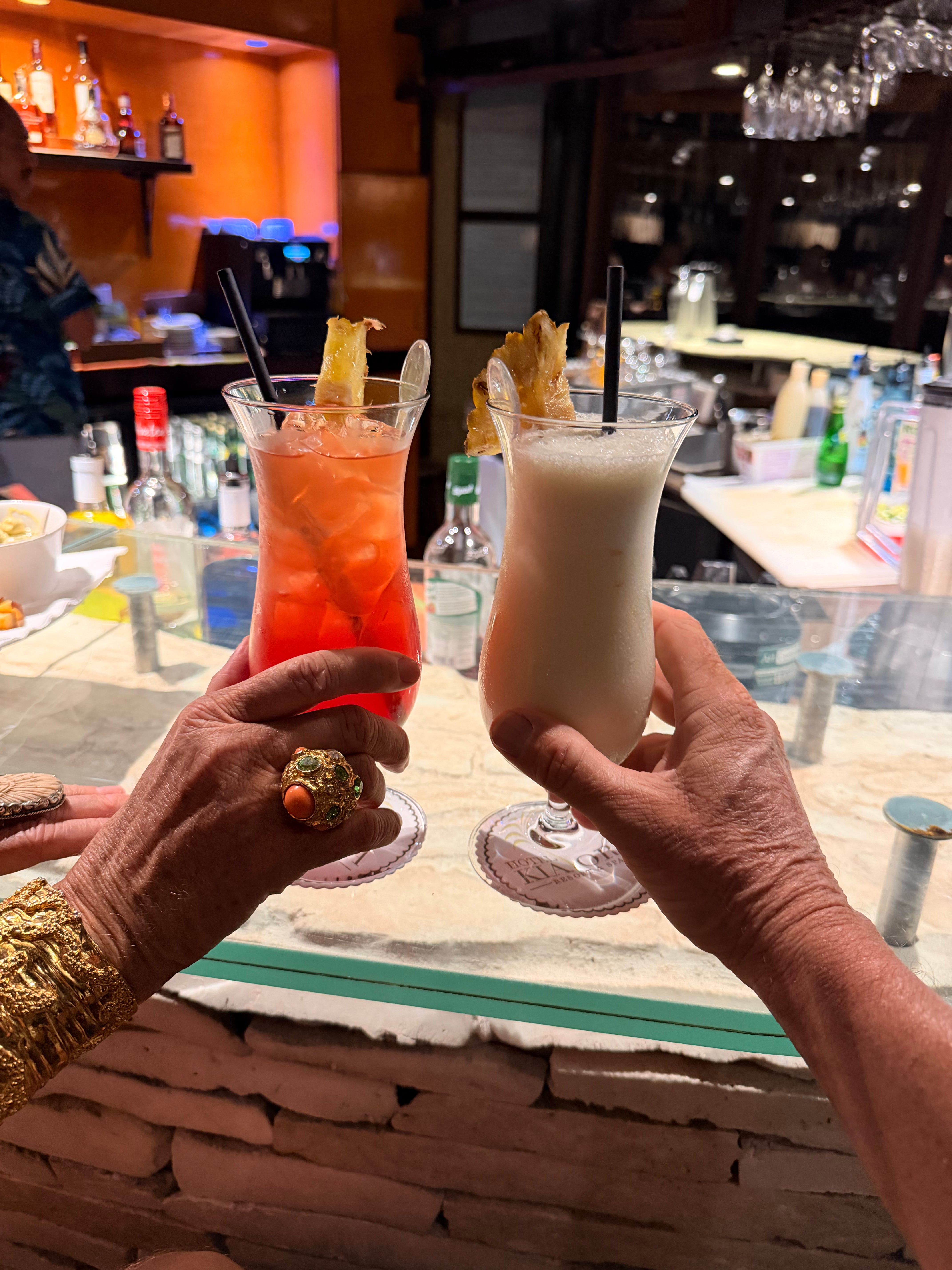
We would go back to this hotel restaurant several times while in Rangiroa. It was luxurious to have their dinghy dock just a few hundred feet from Some Tuesday. We’ve grown used to old, dilapidated docks or even needing to beach the dinghy to get ashore. So a good, sturdy dinghy dock is much appreciated and will bring our business every time!
The next day, we took the dinghy to the town dinghy dock, which was also substantial. After tying up, we found a delightful little beachside “Snack” (Polynesian term for casual restaurants). We ordered lunch and a couple of cold beers, and were joyous to be back in “civilization!”
A couple days later, we rented two bicycles to explore the island a bit more. We just stopped into a small house with a rack of bikes our front, just a short walk from the dock. He didn’t speak English, but we indicated we wanted two bikes. He said they were $10 each and accepted the cash. And off when went! No paperwork. No ID. No nothing other than handing him the money. There is something very pure and happy about a place where a transaction like that is routine.
Our first stop was Koo Koo Pareo, a place Meghan had been talking about for weeks! A pareo is a traditional Polynesian garment of hand-painted lightweight fabric, and worn as a wrap-around dress or sarong. The artist in Meghan was seeking out the most famous pareo artist on the island and she was dying to meet Koo Koo! During our time there, we visited many pareo shops, and most of the others seemed to be knock-offs of Koo Koo’s designs!
Meghan was so excited to meet Koo Koo and the two immediately hit it off. She offered to show us her latest work, and graciously invited us out back to give a demonstration of her technique. The funniest part was when Meghan asked to collaborate on a design (which we would buy) and help pick the colors and arrangement. Koo Koo flatly (but politely) refused and Meghan respected it without question. Any good designer desires to keep her designs pure! And I always very much enjoy watching Meghan’s deep appreciation for art and artists. Meeting Koo Koo was a highlight, and all the color and beauty could have been injected directly into Meghan’s veins!
Note: we learned later that her name is pronounced just as it’s written, like a cuckoo clock, and not CoCo.
We made several provisioning trips to the “magasin” or small store. Overall, it was pretty slim pickin’s here, not much different than the other atolls. Fresh vegetables were rare and we were always excited when we found any. But we certainly were able to stay well fed - especially since Meghan has become a stone-cold expert at provisioning and boat cooking! We eat better on board than in any restaurant in French Polynesia. But still, finding, buying and transporting food back to the boat is always a challenge.
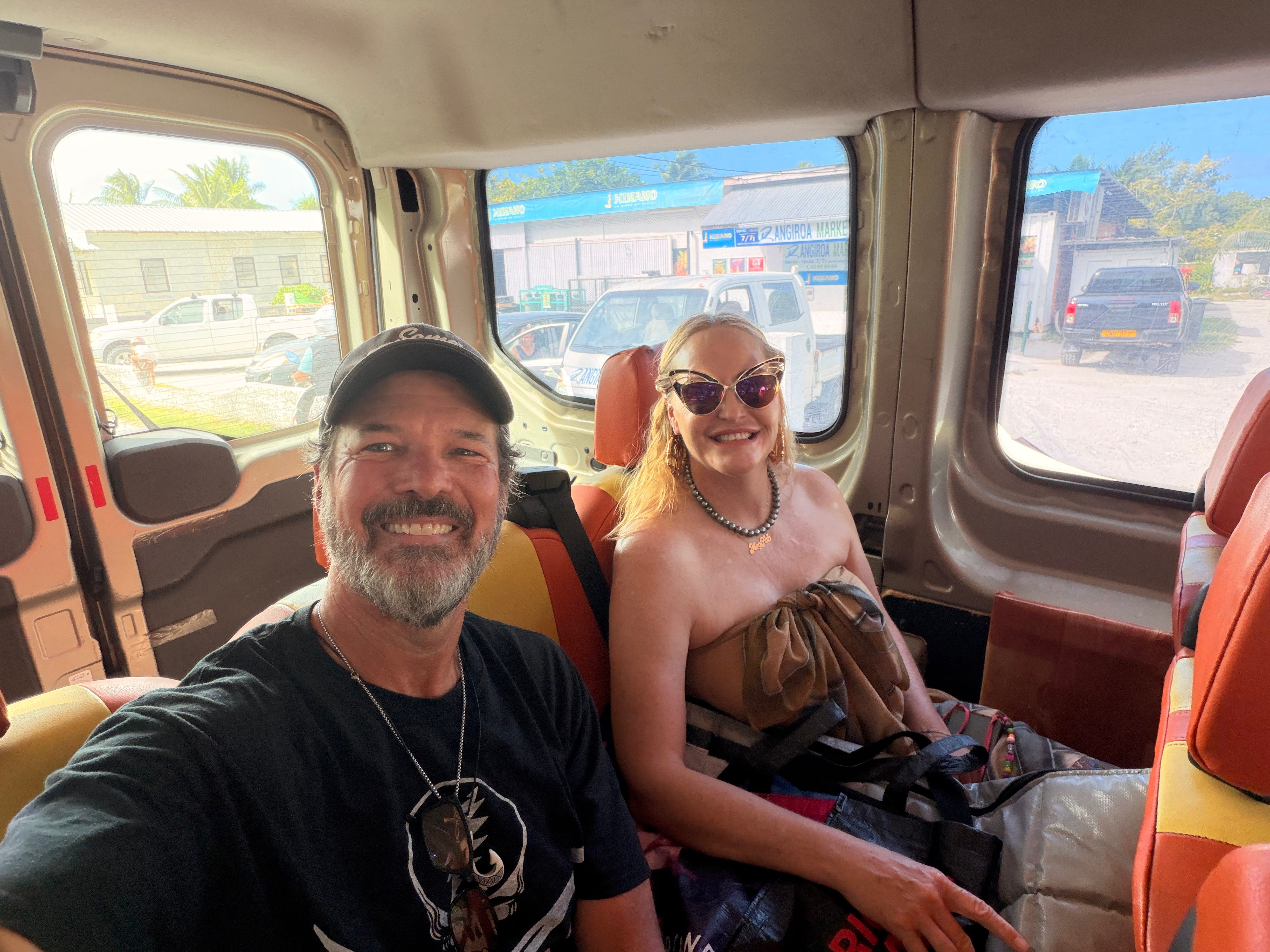
We got a ride from a van/taxi service to the village, closer to the airport thinking the stores there would have better selection. Negative, ghost rider! They were still very small stores, without much selection and with paltry assortments of fresh veggies and meat. Meghan has taken to calling them “sad potatoes.” Please note! We are NOT complaining! The Tuamotus are very remote and supplies come by boat. The food situation is easily understandable - the idea here is just to communicate with you, dear reader, what it’s like living on a boat in these remote islands!
The weather in Rangiroa was sublime for the first half of our stay, and awful the second half! For the first half, we had light, easterly winds and flat water, which makes for great sleeping at night. The water was glassy most nights - calm and quiet. It adds to the beauty and peacefulness of the location.
After four days or so, we learned there was some rough weather coming in. We started hearing from other cruisers that they planned to leave Rangiroa and head over to Tikehau, where there was an anchorage with better protection from the incoming southerly winds, expected to be 20-30 knots. Since the anchorage in Rangiroa was open to the south and southeast, we could expect rougher conditions.
But, we had 25 knot winds the day we arrived and anchored, and it wasn’t terrible. We also feared that if every cruiser for miles around was headed to Tikehau, it might become a very crowded anchorage. So we decided to stay put, although we did move out to deeper water. The southerly winds would swing us around to the north, pushing us uncomfortably close to shore and some shallow bommies (coral heads). I didn’t want to take that risk.
So we weighed anchor and motored out to a wide open area with plenty of room to swing. It was 45 feet deep, so I put out all 300 feet of chain and another 30 feet of rode, for a total of 330 feet, giving me greater than 7:1 scope on the anchor. That length of chain/rode compared to the depth is how you ensure your anchor will hold tight.
A scope of 7:1 means you have 7X more chain/rode than the depth. This ensures the chain pulls laterally on the anchor, which digs it into the sea floor. “Rode” is just a sailor’s term for rope, when it’s used on an anchor. My “ground tackle” setup has 300 feet of 12mm chain followed by 200 feet of 1-inch 3-strand nylon rode (total 500 feet) attached to a Mantus M2 105 pound anchor. It’s major overkill for this boat, but when a storm blows in, I want to be able to sleep soundly knowing my anchor is going to hold.
Over the next four days, we would come to regret our decision to stay put! We had 4-5 foot swells washing through the harbor and the boat rocked like a bronco, day after day. It was so rough, it would be dangerous to get in and out of the dinghy, so we didn’t go ashore. We just stayed aboard for five days!! Ugh…. A crowded anchorage might not be so bad!!
These are the times when living on a boat really hits home. The weather now determines your life, your schedule, your routine, and your safety. If the weather isn’t good, the schedule doesn’t matter - you don’t sail! If there’s no wind, you either burn diesel or wait. If there’s a system blowing in, you’ve got to decide where you’re going to hunker down. It’s very different from life on land, where you can just go inside and watch TV!
The positive aspect of that however, is that I feel much more in touch with and part of nature and God than I did on land. Out here, the sunrise and sunset determine the rhythm of the day. You find yourself staring at the vast ocean every day. You notice little things, like the fact that French Polynesia doesn’t have very many birds. I have no idea why, but the pelicans and seagulls that are everywhere in Mexico and Central America are nowhere to be found here. All in all, it feels like a much more natural and authentic way to live, and we love it. Most of the time!
Speaking of nature, I did manage to get some dives in while in Rangiroa. Sharks were everywhere, as usual and the drift dives were fantastic. The current was absolutely ripping along, and I laughed out loud when we were costing along at what felt like 5 or 6 knots at 85 feet deep. Wow!! I got this amazing shot of a huge school of barracuda, but the giant manta continues to be my white whale!
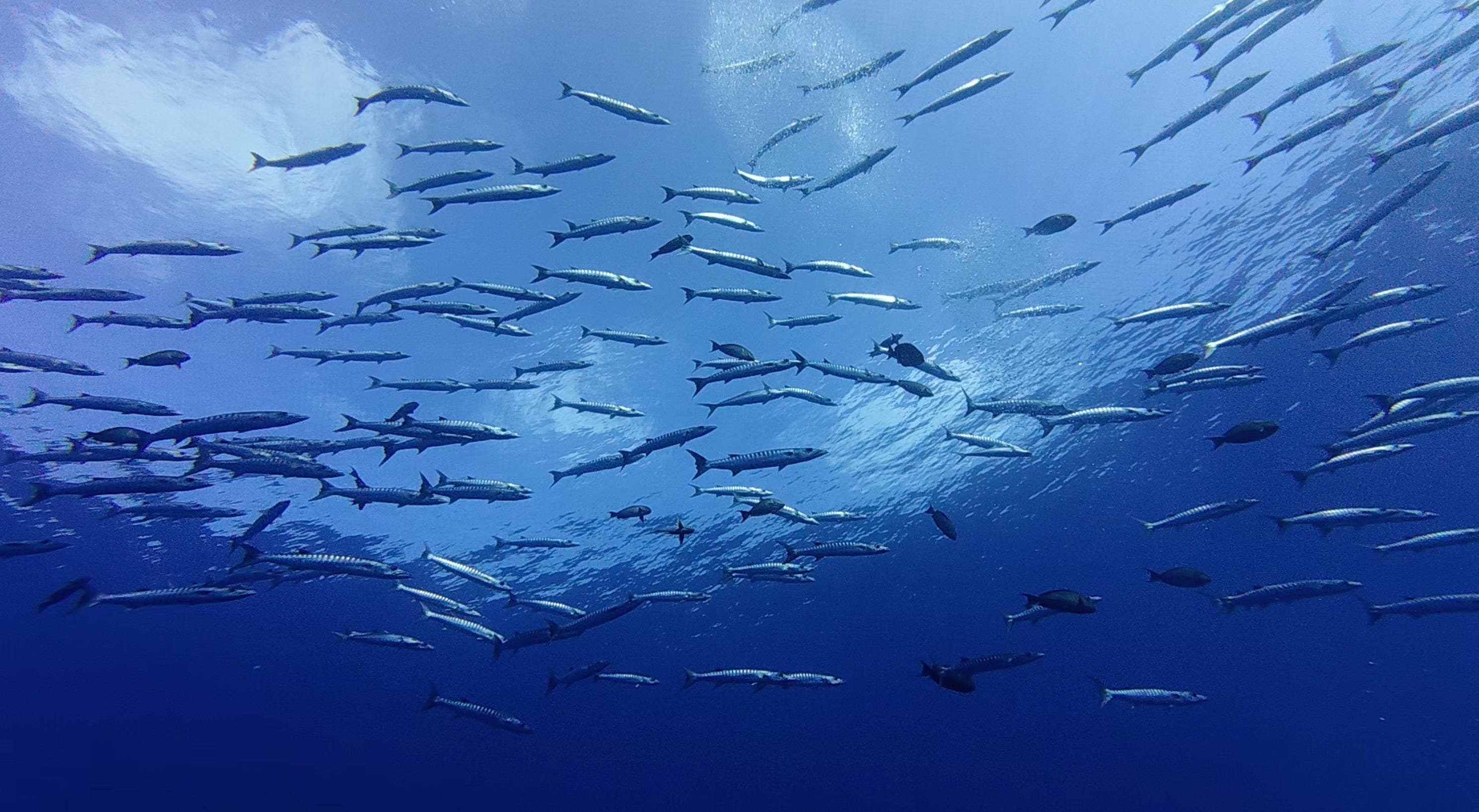
Our Australian friends on Cut & Run, whom we had met in Fakarava, were here, too. We went to dinner with them and had them over for a drink. He also needed someone to dive on his anchor in preparation for the storm and determine if it was well set, or wrapped on any bommies. I was already diving under my boat, checking the anchor and cleaning the hulls, so I happily swam over and checked his out. It was fine, and I’m always happy to do favors and pay it forward for other cruisers!
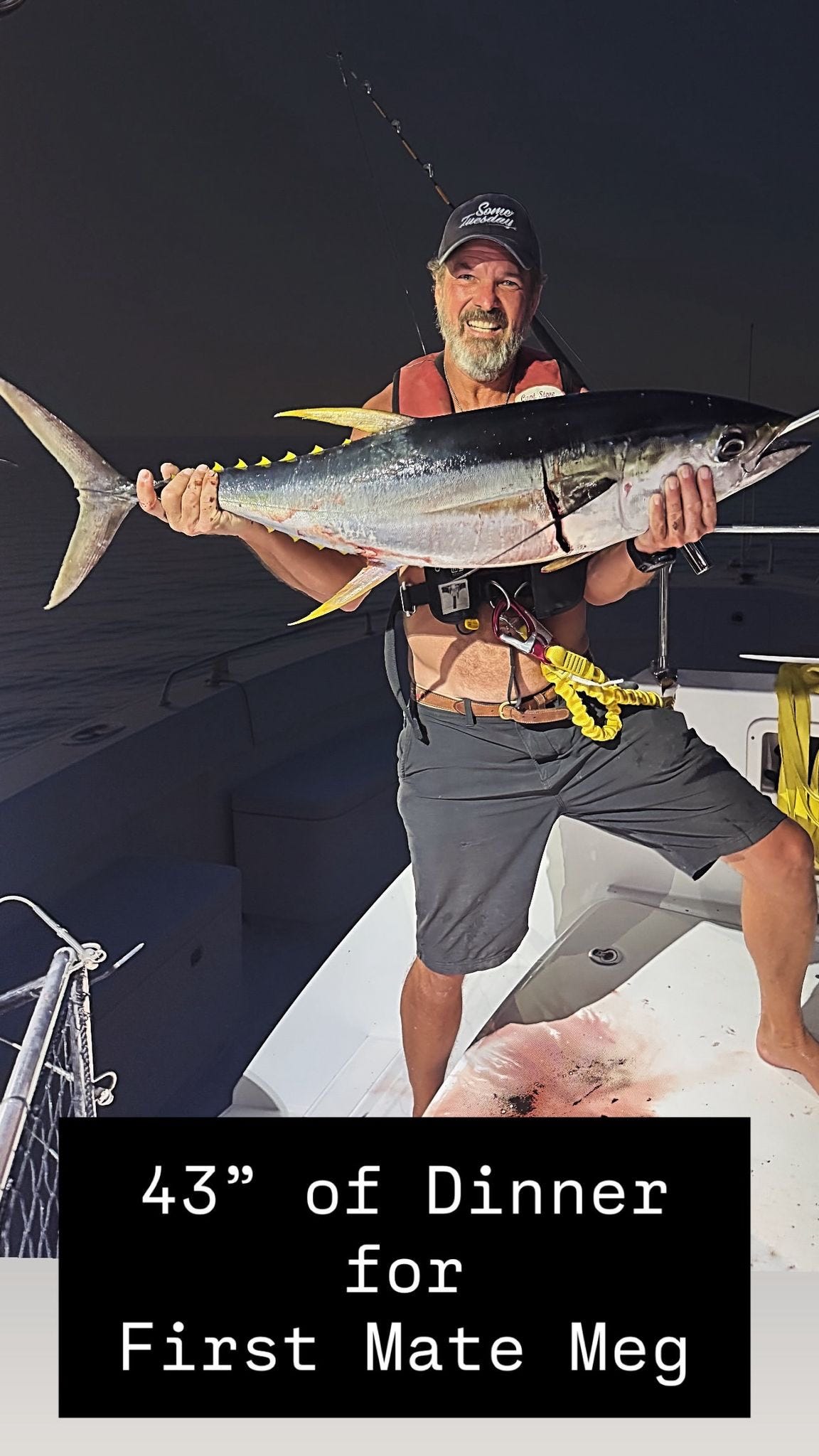
Oh, I forgot to mention in my previous entry that I’d caught a 43” yellowfin tuna on our way to Apataki. It produced nearly 20 pounds, that filled our freezer and would feed Meghan for weeks! Sadly, I don’t like tuna very much, but it was fun to catch and I’m getting much better at filleting these big beasts!
By Thursday June 18, the weather had finally cleared and we had a good window for the sail to Tahiti. It was only about 200 nautical miles and I estimated it would take 30-36 hours to sail. With a planned departure around 1:30 in the afternoon, the goal was to arrive before sunset the next day.
First order of business however, was getting safely back out of the Tiputa pass and into the open ocean. Slack tide was estimated for 2pm, so we planned to be at the pass by 1:30. That way I could put eyes on the water beforehand and try to determine if the current was low enough to be safe. It was always possible that slack would occur earlier than predicted.
We weighed anchor and arrived around 1:30 as planned. We slowly approached the pass, and carefully observing the water though binoculars could see the current was still raging. We could see the outgoing current ripping past the little sand bar and out into the pass creating monstrous standing waves on the west side of the pass. No good!
We aborted the pass and turned around to circle in the lagoon for at least 30 minutes, hoping the current would settle down. Around 2:15, we made another approach. It was definitely more calm, but still looked rough. We probably could have made it safely, but I decided that discretion is the better part of valor, and aborted a second time. We spent another 45 minutes circling in the lagoon before approaching again a little before 3pm.
The standing waves were still there, the current was still there, but both were much less extreme. I decided this was the time, made sure Meghan felt good with that, and pushed the throttles up to 2500 rpm. As we entered, it wasn’t bad, but the bigger waves were still in front of us. I had coral reef less than 200 feet to starboard and four foot standing waves to port. I tried to skirt the edge of the waves to avoid taking them in full, but also stay clear of the reef.
Soon we were bucking those waves and slamming down into the next one. Water was cascading up over the bow. I slammed the throttles wide open to get as much power as possible. Now I was bashing through the waves instead of riding over them, but I decided that maintaining enough way to keep good rudder feel was more important.
It was hairy. Meghan was white-knuckling the helm seat as I wrenched the wheel back and forth, trying to navigate a straight line through the waves and crosscurrents. Soon enough, they began to die down as we emerged out the other side. It took a few more minutes until we were safely in the open ocean and could relax. We high-fived and I pulled the throttles back to cruising speed as I turned upwind to raise the mainsail.
With the main now up, I turned westward to sail around the northeastern tip of Rangiroa. It would take about two hours to clear that point before we could turn south toward Tahiti. The first 16 miles after making the turn were sure to be comfortable since we would be in the lee of the atoll, on the west side with seas coming from the southeast. But as soon as we cleared the southwestern tip, all bets were off and we would again be at the mercy of mother ocean.
The seas were rough, and we were taking them on the port forward quarter, which caused both pitching and rolling, ensuring everybody was uncomfortable. But the winds were blasting at 20-28 knots all night long, so we maintained great speed all night. We were beam reaching and maintaining average speed of 7-8 knots, touching 9 regularly. That’s fast for this 33,000 pound sailing condo!
Meghan took watch from midnight to 3am and then came back up at 6am. Friday continued with good wind and the seas settled out to become much more comfortable as the day went on. But the speed kept up!
Land ho!!! We spotted Tahiti around 2pm on Friday, approximately 20 miles out. Not bad since our original expectations were to arrive Saturday morning, or perhaps Friday while it was still dark (never desirable!).
Around 4pm, we were approaching the Papeete pass and I picked up the VHF, dialed to channel 12 and called, “Papeete Port Control, Papeete Port Control, this is Some Tuesday requesting clearance to enter the pass and proceed past the airport to the anchorage south of Marina Taina.”
Port control granted clearance and instructed me to call again when we were 5 minutes away from crossing the airports west end. They control traffic carefully to ensure boats and planes don’t interfere with each other.
We motored past the airport and continued south in the lagoon to the anchorage only to find VERY crowded conditions. Boats were packed in stem-to-stern and finding a spot to anchor was NOT easy. We evaluated several different spots as we motored up and down the lagoon. Meghan has become quite the expert at picking good spots to anchor, and I’ve come to listen to her and take her guidance to heart. When we’re anchoring, we wear bluetooth headsets and she stands up on the bow. We discuss different possibilities.
Then, as we home in on a good spot, she’ll give me guidance about exactly where to drop the anchor. We need to avoid bommies and get the anchor set in a nice sandy patch, ensuring enough room to swing to not hit other boats or shallow water. It’s complicated - and Meghan’s developed a real touch for it!
With no room at the inn, we finally settled on a spot that was not officially an approved anchorage. There were some other boats there, so we decided to give it a go. Meghan picked a spot she liked, gave the OK to drop the anchor, and it was down before sunset. We found ourselves only 180 feet from the overwater bungalows of the Hotel Intercontinental. Not a bad view from our living room! Welcome to Tahiti!