194 nm to Mazatlan
1501 nm cumulative
This passage, 194 nm over open water, crossing from the Baja Peninsula to the Mexican mainland, is the longest crossing either of us has ever done to this point. We did 222 miles down the peninsula, but we were never more than 50 miles offshore. On this passage, we will be nearly 100 miles offshore when at the midpoint.
The weather forecast looks perfect. Light Northerly winds in the morning, backing to NW just after noon and increasing to 12-16 knots. Since we’re heading SE, a NW wind will be delightful, and we’ll be on a broad reach (wind hitting the port rear quarter of the boat) all day long. With seas coming from the North, we’ll be living the famous saying “fair winds and a following sea.”
And that’s exactly what happened. We motored for a couple hours in the morning, mainly to get out of the shadow of Isla Jacques Cousteau and get into the open ocean. By 11am, we had the mainsail and the gennaker flying on a beautiful broad reach, just as expected. We set the sails once, and never touched them again for the entire passage!
By the mid-afternoon, we had sporty conditions that were absolutely ideal. 16-18 kn true wind, giving us 10-12 of apparent wind. Sublime conditions to fly full sail and just CRUISE! We were maintaining boat speed of 8 knots and hitting 10 once in a while. On this 33,000 floating apartment, that is FAST!
The best part however, was the wind maintained through the night. Carrying 8-9 kn of boat speed all night long is a blessing and put us into Mazatlan around 2pm, just as expected. It made up for the hours of sailing at 4 knots the previous morning!
Meghan and I spent hours relaxing in the forward cockpit, in the shade of the big gennaker sail. It was glorious and the weather was sublime. Both of us agreed, it was our most pleasant passage ever and some of the best sailing of our life. Meghan made delicious meals as always (she preps everything while we’re on anchor and then assembles and heats when underway). I eat like a king, and I’m so grateful for Meghan - not just for the food, but for being an incredible woman to join me on this outrageous journey - and put up with the more annoying parts of my personality :-)
We had some excitement in the middle of the night. I was on night watch around 3am when a large echo appeared on the radar, about 24 miles in front of us. No big deal, it’s a vessel underway and within a short period of time, I’ll be able to determine its course and heading and whether we need to be concerned about it in any way. 24 miles away gives us HOURS to figure this out. Nothing urgent.
But….
It didn’t move. Down to 20 miles now, and it was still directly in our path. What the heck?
At 18 miles, the radio crackled, “Some Tuesday, Some Tuesday, Some Tuesday, this is the vessel Tranquilo. Are you monitoring 16?”
I snapped to attention and picked up my radio. “Tranquilo, this is Some Tuesday. Let’s switch to 69.”
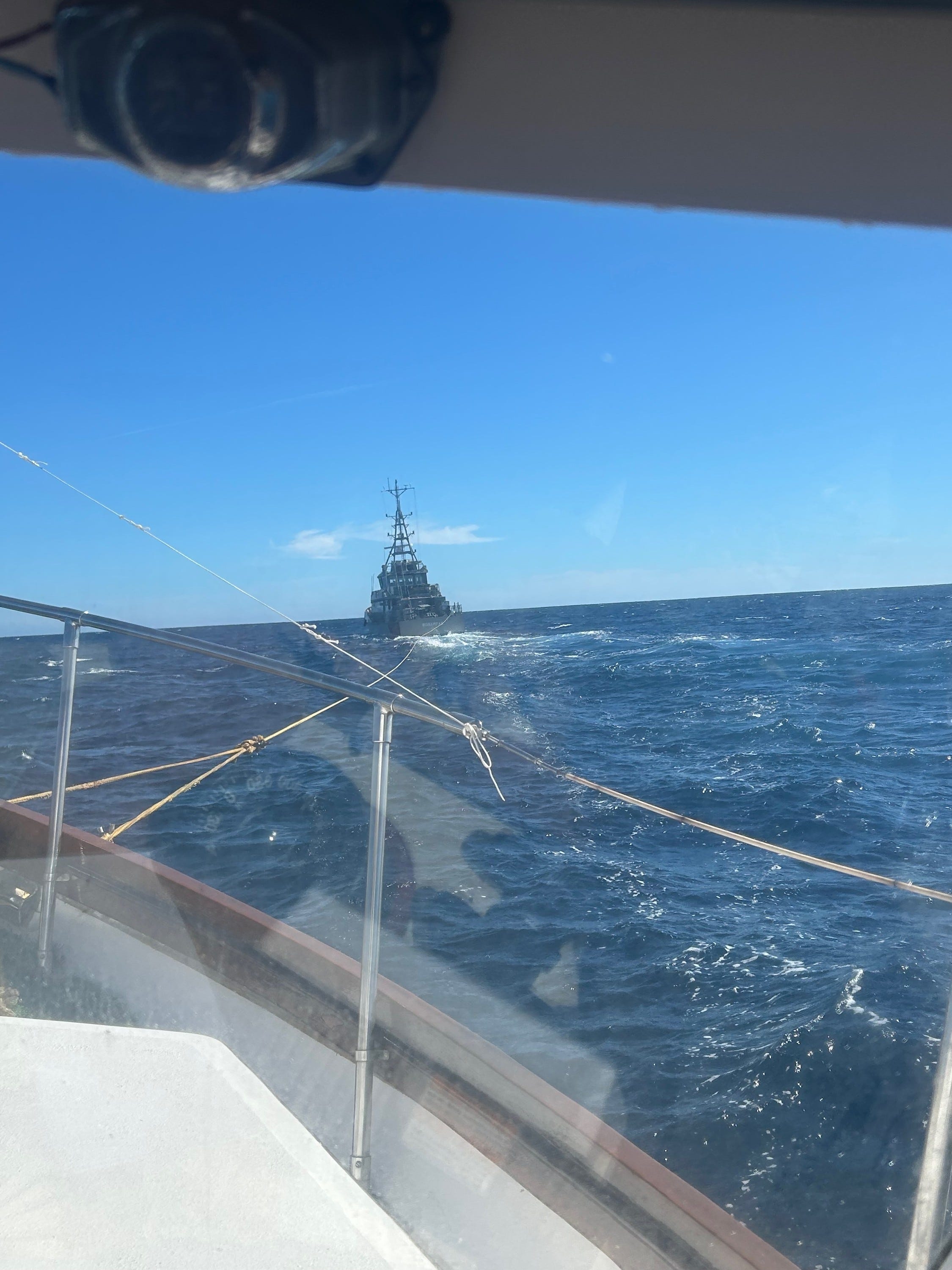
After changing to the working channel, Tranquilo explained that they were a single-screw trawler (a Grand Banks, I would later learn) and that they had lost their engine. They were dead in the water. The skipper explained that they had deployed a sea anchor with 75 yards of rode. In layman’s terms, that means they had a large underwater parachute deployed off their bow, tied to 225 feet of rope. A sea anchor is used to stabilize your boat and limit drift in a storm, or in this case, when he was DIW (Dead in the Water).
It also presented a fairly sizable hazard, and hitting his vessel or that rode would mean disaster for both of us.
The skipper (I now knew his name was Mike Smith) asked if I would please notify the Port Captain and Port Operations in Mazatlan when I arrived, and request assistance. He gave me his exact coordinates and I confirmed that he and his wife were safe, not taking on any water, and had enough food and water to last for several days. I promised I would send help.
For anyone wondering why we didn’t assist directly, doing so would be extremely risky and increase the danger for both vessels. Approaching another vessel in the open sea is very dangerous, especially with his sea anchor deployed. With no imminent loss of life, or need for supplies like water, the right decision was to push on and endeavor to send help.
The good news for Capt. Mike is that I had a Starlink on board. I had also researched the SAR (Search and Rescue) resources and contacts for every country we plan to visit, and had a document handy with all that info. I pulled up that doc and found that the US Coast Guard takes responsibility for the entire Pacific Coast, including down to Mexico. I had a number for the USCG RCC (Rescue Coordination Center) in Alameda, California (near San Francisco).
I called the number and was immediately connected with a coastie named Michael. He was very helpful and professional. He took Tranquilo’s coordinates from me, confirmed that he was not in imminent danger and had food and water on board. Then he wanted to confirm if Tranquilo was a US flagged vessel and to re-confirm their coordinates. I made a quick radio call to Tranquilo and confirmed both, while still on the phone. Starlink is truly a game changer in the cruising world!! It was the ONLY reason I could make a phone call, since ANY other resources were well out of radio range. We were 115 miles offshore, with no ability to reach anything by radio, except other vessels. But with Starlink, my phone worked!
Michael at the RCC told me he would contact the Mexican Coast Guard and call me back to confirm, which he did about an hour later. I relayed all this information to Tranquilo by VHF radio. The sound of relief in Capt. Mike’s voice was all the thanks I needed!
Because of Starlink, Mike and Linda spent 18 hours stranded at sea, instead of what probably would have been several days. If you’re out cruising and have NOT put a Starlink on your boat, I strongly urge you to reconsider. It’s not just a convenience - it’s a safety device. I actually have THREE on board. The one that is operational, a spare “standard” dish and a Starlink Mini, which can operate standalone, provided I can get power to it. I keep a Starlink 12 volt power source on board just for that reason.
I have video of much of the radio traffic that night, along with pics and video that Capt Mike shared with me after the fact. All of them will be included in our next YouTube episode!
After this fantastic, magical, peaceful passage, we cruised into Mazatlan around 2pm, sailing DDW (dead downwind) wing-on-wing. That’s when the mainsail and the Genoa are deployed to different sides of the boat, making “wings.” It takes some skill to pull this off, so I was proud to get it rigged up right and sail into the harbor like a boss!
We anchored next to Stone Island (Isla de la Piedra) in 17 feet of water over soft sand. A beautiful beach was 500 feet off our bow, and it was lively with lots of music and revelry going on! The energy was electric.
After we were comfortable that the anchor was well set, I dropped the dinghy and we buzzed around to the harbor entrance. This was a rough ride, since we had to cross pretty open ocean in our 12 foot dinghy, but once in the harbor it was fine. The guidebook told us to find Club Nautico which had a dinghy dock that we could use in exchange for “la propina” (a tip) for the security guard.
The dinghy dock was a few pieces of plywood that had been screwed to the gunwales of an old wooden panga. It looked about as safe as cliff diving, but we made it work. We pulled up, unloaded Meghan, and locked my 15 foot chain to the dock!
Within 30 minutes, we were in El Centro enjoying margaritas and tacos. Mazatlan was lovely, although we found people less friendly to Americanos than they are in La Paz or Cabo. Didi drivers (similar to Uber, but more prevalent in Latin America) were noticeably less friendly. Not rude, just not friendly.
No worries. The Mexicans that were running restaurants and shops where we spent money were VERY friendly. Imagine that :-)
Meghan haggled for a plant hanger that she plans to use for fruit. We had a nice meal, a few drinks, and returned to the boat.
The next day, we took Mr. Pickles ashore, since he had gotten sick and had diarrhea. He is an old guy, and was clearly not feeling well. Poor Meghan had a heck of a mess to clean up, but she was much more worried about the little doggie that has been her ride-or-die for 15 years.
We found good vets in both La Paz and Mazatlan. Unlike the US, their fees are super reasonable and they aren’t trying to sell you stuff you don’t need. With veterinarians and many other services, we are finding this to be the case. Americans really don’t know how badly we’re being screwed in our own country.
Medical services, pharmaceuticals, cosmetics, food, veterinary services, and the list goes on and on. Services are high quality and priced reasonably. It’s worse in California of course, but all over the US citizens of our country are being ripped off. It’s ridiculous and doesn’t have to be that way. Mexico does not feel like a “third-world” country. It feels pretty good, and we’ve been able to get what we need while the cost of living is great. What’s not to like?